Search results for tag #fediverse


RE: https://littleone.littlefedi.social/@stefano/01a07c8a-904d-7503-af16-b9bbe8f11f08
This makes me particularly happy. 😄
littleFedi will get its first public showing at Berlin FediDay, running on a Raspberry Pi Zero 2 W.
Meanwhile, I will be at EuroBSDCon.
Two events, two communities I care deeply about, and one very interesting weekend ahead.
#littleFedi #Fediverse #OwnYourData
For the first time, littleFedi will be shown publicly
And I have to say, this makes me very happy. :)
A pre-release build will be running on a Raspberry Pi Zero 2 W at Berlin FediDay, where people will be able to see it, try it, play with it, and probably abuse it a little too.
Unfortunately I won't be there in person, because I'll be at EuroBSDCon that same weekend.
But really, what better place than FediDay for the first public appearance of littleFedi?
A huge thanks to @vortex@tldr.nettime.org - Adam - for taking this on, building the demo, testing it independently, and agreeing to respect the temporary source embargo while we complete the last checks before the public release.
I'm especially curious to see how littleFedi behaves once it's in the hands of people who didn't build it.
This is exactly the kind of test I was hoping for.
More details about the presentation:
https://ctalx.c-base.org/fediday-2026/talk/review/AJNLVMPYRSVX3JDHDHYSEZZNSP9KQSYH

For the first time, littleFedi will be shown publicly
And I have to say, this makes me very happy. :)
A pre-release build will be running on a Raspberry Pi Zero 2 W at Berlin FediDay, where people will be able to see it, try it, play with it, and probably abuse it a little too.
Unfortunately I won't be there in person, because I'll be at EuroBSDCon that same weekend.
But really, what better place than FediDay for the first public appearance of littleFedi?
A huge thanks to @vortex@tldr.nettime.org - Adam - for taking this on, building the demo, testing it independently, and agreeing to respect the temporary source embargo while we complete the last checks before the public release.
I'm especially curious to see how littleFedi behaves once it's in the hands of people who didn't build it.
This is exactly the kind of test I was hoping for.
More details about the presentation:
https://ctalx.c-base.org/fediday-2026/talk/review/AJNLVMPYRSVX3JDHDHYSEZZNSP9KQSYH

RE: https://berlin.social/@berlinfediday/117200439673886108
Awww Berlin #FediDay is almost here. I'm super super honored and excited to speak there next Saturday.
Currently fine-tuning my presentation, which will be a love letter to the people who contribute to the #Fediverse and give me so much hope for the future ❤️
Today’s littleFedi updates:
- Strengthened allowlist-only federation: redirects, discovery, deliveries, and hostname handling now consistently respect the policy. (Spoiler alert: there's a reason behind this 😉)
- Fixed boosts for local-only posts, plus a timeline relative-time refresh issue.
- Fixed an Android PWA green-bar issue by letting the manifest update normally.
- Disabling remote media caching now safely clears leftover cache jobs instead of leaving the queue unhealthy.
Friendly periodic reminder that snac is a great, great piece of software.
I've upgraded #FediMeteo in minutes, recompiling snac *inside each jail*.
The Fediverse, as the Fediverse should be.
Periodic official communication, just to clarify a few things.
The BSD Cafe is an open, inclusive and friendly community. A community of people who try to be *“pro, not against”* and *“supporters, not haters”*: enthusiasts, friends, people who come here to share, to learn, to discuss. Not to hate each other.
This does not mean that we all have to think in the same way. Quite the opposite: it means that we can have different opinions, discuss them, defend them strongly, and question each other’s ideas.
What it does not mean is that it is acceptable to insult, threaten, attack people, or pretend that there can only be one morally acceptable position on every possible subject.
Calling the BSD Cafe a "Nazi Bar" from the outside simply because we do not automatically censor people who have an opinion different from yours is offensive towards the hundreds of people who are part of this community.
People are, of course, free to criticise what happens here. But expecting us to attack, ban or silence someone because you believe they deserve it, and then accusing the whole Cafe because we do not, is something different.
And I have seen something even worse lately: actual calls for hate. The equivalent of *“hey, everyone, go and attack this person”*, simply because that person does not share your position.
No. This is not acceptable.
And, dear friends, declaring yourself anti-Nazi while organising a crowd against somebody, intimidating them and treating them as an enemy who deserves to be attacked means using exactly the kind of methods you claim to oppose.
I do not say this lightly. I come from a family, and from a country, with a very real history of fascism and of the antifascism that immediately followed it. These are not just abstract words to me.
Hate is not tolerated, at any level, inside or outside the Cafe. The same is true for threats, intimidation and aggression. Believing that our cause is right does not make those behaviours more acceptable.
You disagree with someone? Say it. Explain why. Argue against their ideas. Support yours with all the conviction you want. But do not aggressively attack. This is not tolerated.
And expecting everyone else to attack that person too, or considering them somehow complicit because they do not, is something different. And it is not what I want for this community.
On any subject.
Even pineapple on pizza (!!!).
The Fediverse is a non-place, but it is made of real people. Wonderful people, very often. Let’s not turn it into version 2.0 of traditional social media, where every discussion becomes a war and anyone who does not think exactly like us automatically becomes the enemy.
In the last few weeks I have seen people stepping away exactly because of this. On different subjects, people accused of the worst things not because of something they had done, but because they had not said what someone expected them to say. Some of them, for their own wellbeing, simply decided to take a step back.
We all lost something because of that. Nobody gained anything.
So let’s keep supporting what we believe in. Let’s do it with conviction, and with firmness when needed. But let’s discuss ideas without turning people into targets.
From experience, I have learnt that real change also requires discussion, organisation, patience and concrete actions. We can disagree deeply without stopping considering each other as people.
This is the kind of place I want the BSD Cafe to continue to be.
EDIT: I want to make one thing absolutely clear. I am a committed antifascist, because of my personal history, my family history, and my country's history. Nazis and fascists are not welcome here, and they never have been.
Being accused of fascism or Nazism, or of defending either of them, hurts me personally. Part of the point of this post was precisely this: if we disagree, let's not immediately start shouting "fascism". Let's talk, look at what was actually said and done, and try to understand the situation. Sometimes there is more to it than it first appears.
After 30 years of commitment to open source, openness and collaboration, I honestly don't know how else to make my position clearer. I am deeply saddened by how this whole situation has unfolded.
Periodic official communication, just to clarify a few things.
The BSD Cafe is an open, inclusive and friendly community. A community of people who try to be *“pro, not against”* and *“supporters, not haters”*: enthusiasts, friends, people who come here to share, to learn, to discuss. Not to hate each other.
This does not mean that we all have to think in the same way. Quite the opposite: it means that we can have different opinions, discuss them, defend them strongly, and question each other’s ideas.
What it does not mean is that it is acceptable to insult, threaten, attack people, or pretend that there can only be one morally acceptable position on every possible subject.
Calling the BSD Cafe a "Nazi Bar" from the outside simply because we do not automatically censor people who have an opinion different from yours is offensive towards the hundreds of people who are part of this community. Unless you're a Nazi or a fascist. In that case, you're not welcome here.
People are, of course, free to criticise what happens here. But expecting us to attack, ban or silence someone because you believe they deserve it, and then accusing the whole Cafe because we do not, is something different.
And I have seen something even worse lately: actual calls for hate. The equivalent of *“hey, everyone, go and attack this person”*, simply because that person does not share your position.
No. This is not acceptable.
And, dear friends, declaring yourself anti-Nazi while organising a crowd against somebody, intimidating them and treating them as an enemy who deserves to be attacked means using exactly the kind of methods you claim to oppose.
I do not say this lightly. I come from a family, and from a country, with a very real history of fascism and of the antifascism that immediately followed it. These are not just abstract words to me.
Hate is not tolerated, at any level, inside or outside the Cafe. The same is true for threats, intimidation and aggression. Believing that our cause is right does not make those behaviours more acceptable.
You disagree with someone? Say it. Explain why. Argue against their ideas. Support yours with all the conviction you want. But do not aggressively attack. This is not tolerated.
And expecting everyone else to attack that person too, or considering them somehow complicit because they do not, is something different. And it is not what I want for this community.
On any subject.
Even pineapple on pizza (!!!).
The Fediverse is a non-place, but it is made of real people. Wonderful people, very often. Let’s not turn it into version 2.0 of traditional social media, where every discussion becomes a war and anyone who does not think exactly like us automatically becomes the enemy.
In the last few weeks I have seen people stepping away exactly because of this. On different subjects, people accused of the worst things not because of something they had done, but because they had not said what someone expected them to say. Some of them, for their own wellbeing, simply decided to take a step back.
We all lost something because of that. Nobody gained anything.
So let’s keep supporting what we believe in. Let’s do it with conviction, and with firmness when needed. But let’s discuss ideas without turning people into targets.
From experience, I have learnt that real change also requires discussion, organisation, patience and concrete actions. We can disagree deeply without stopping considering each other as people.
This is the kind of place I want the BSD Cafe to continue to be.
At the end of it all, I’m here because I like being here.
I’m here to talk to people. To read things I care about. To see beautiful photos. To be part of a wonderful community. To talk about the things I love, to share my thoughts, and some of what I’ve learned over the years.
But also to share the small pleasures of life: a good pizza, a tiramisu, a beautiful sunrise over the sea, or a quiet path through the trees.
There is already enough anger in the world.
Life is too short to spend it being angry all the time.

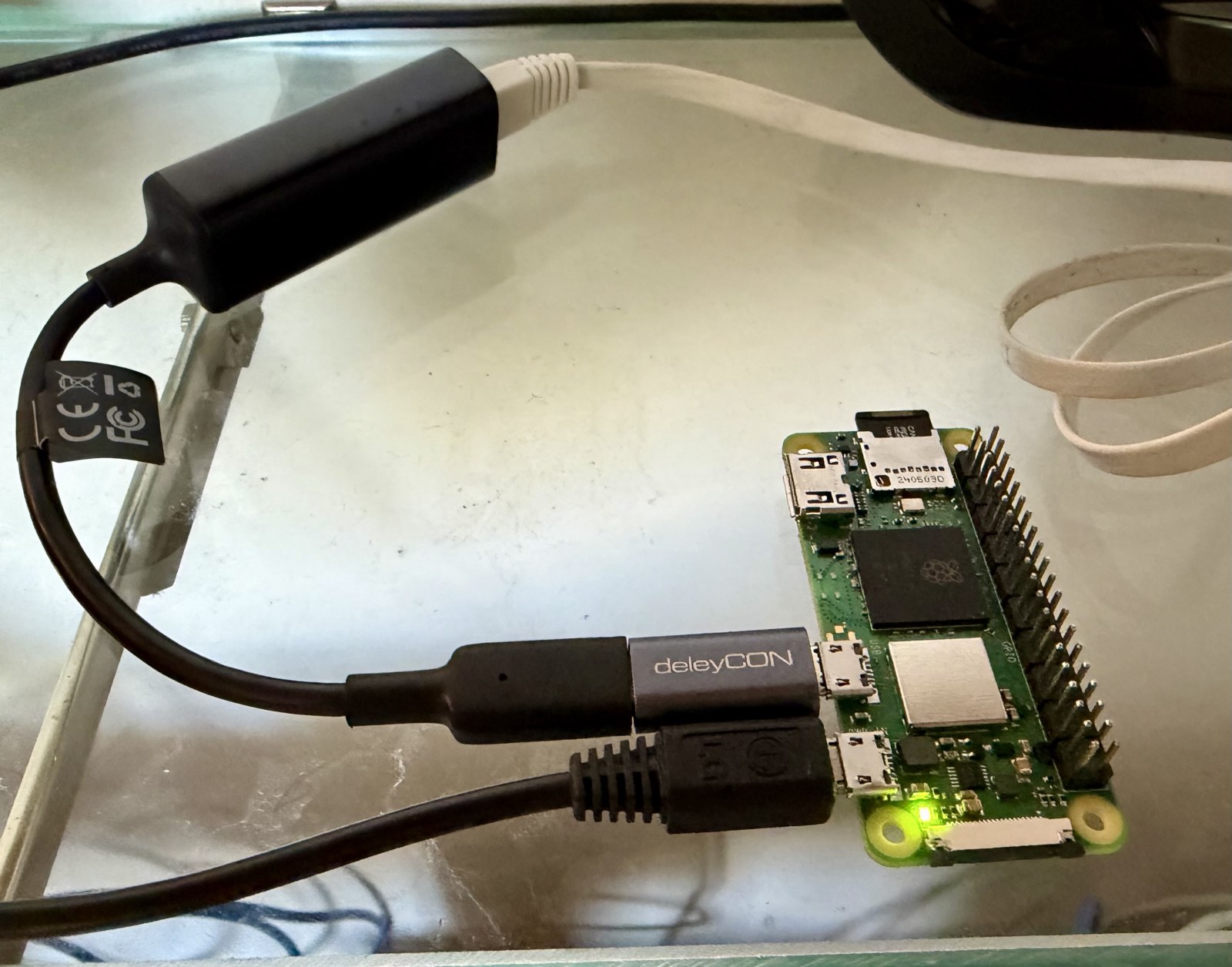
Now on a Raspberry Pi Zero 2 W - powered by NetBSD (armv7) - with an USB ethernet card, as the internal wifi seems to lock when the traffic goes up.
It's blazing fast
Alt...
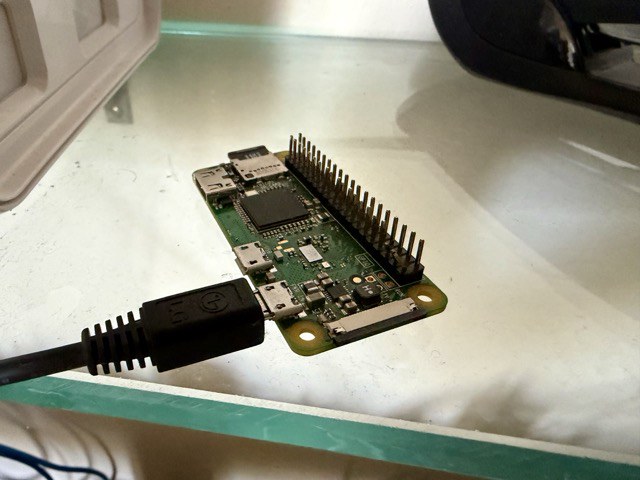
The Raspberry PI Zero 2 W - powered by NetBSD - running this instance

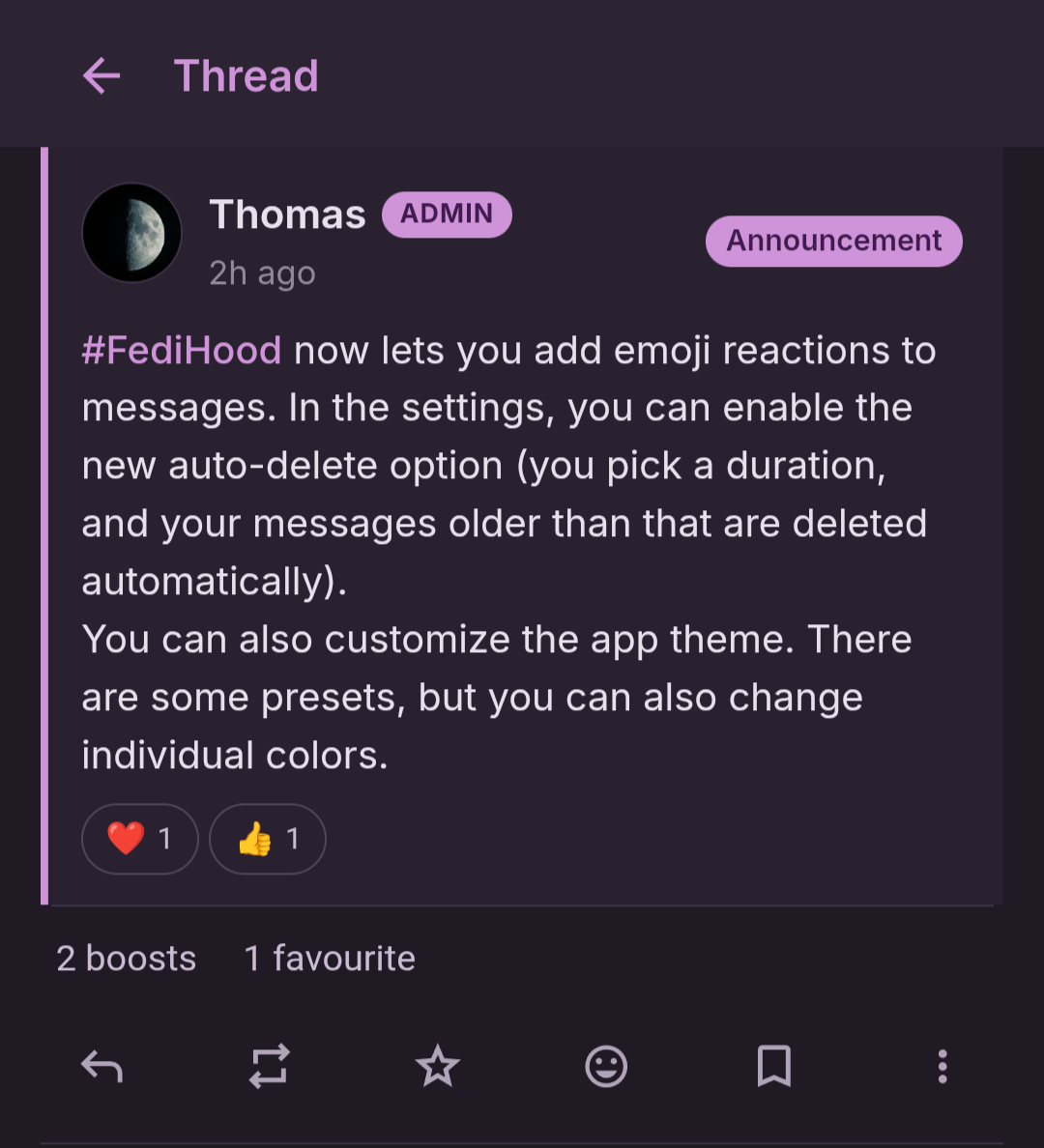
I don't know if #FediHood will be adopted by the #Fediverse community, but I am still doing my best for it. Three new features have been added:
- Emoji reactions to messages (federated)
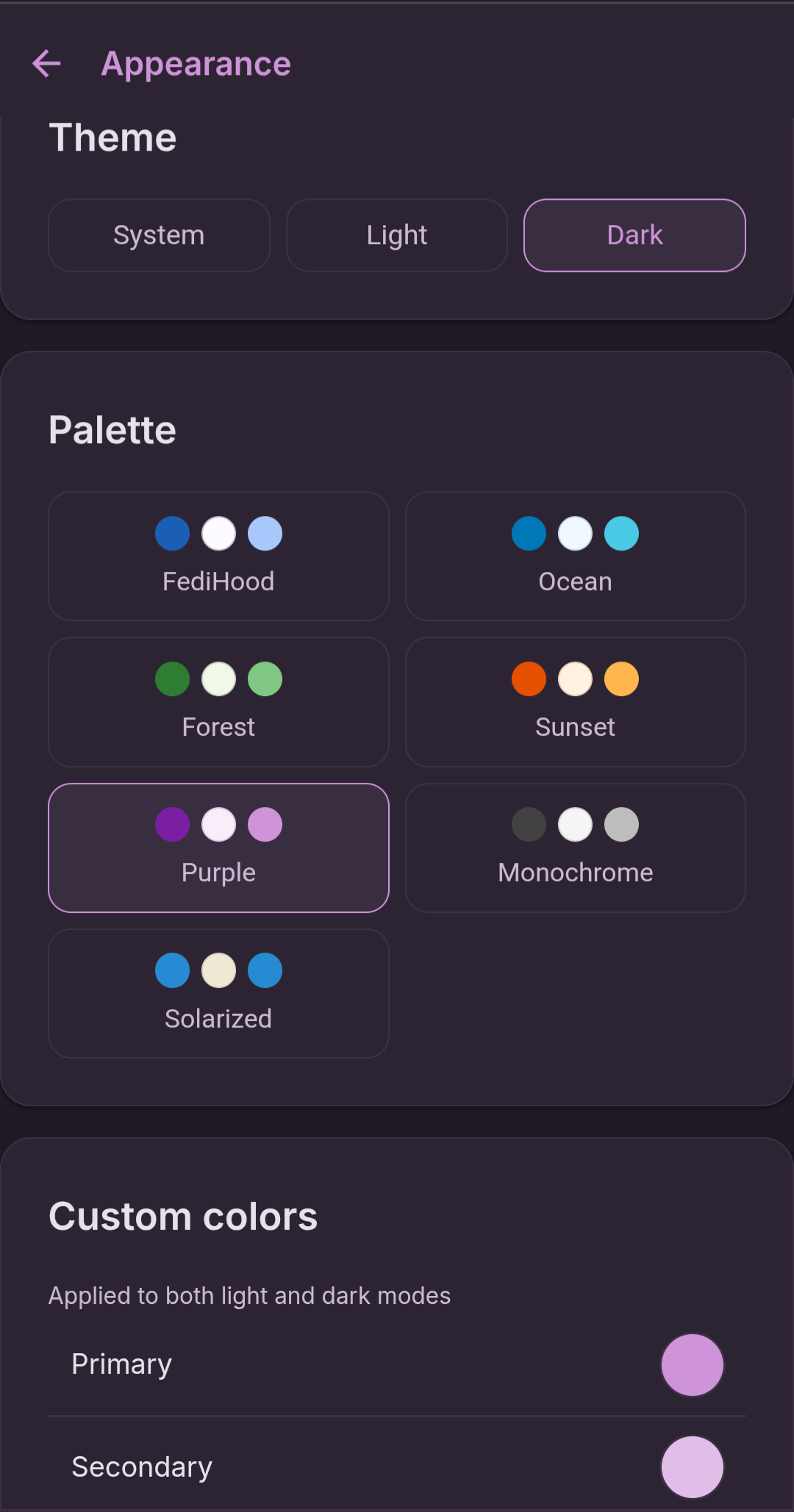
- Theme customization (with presets available)
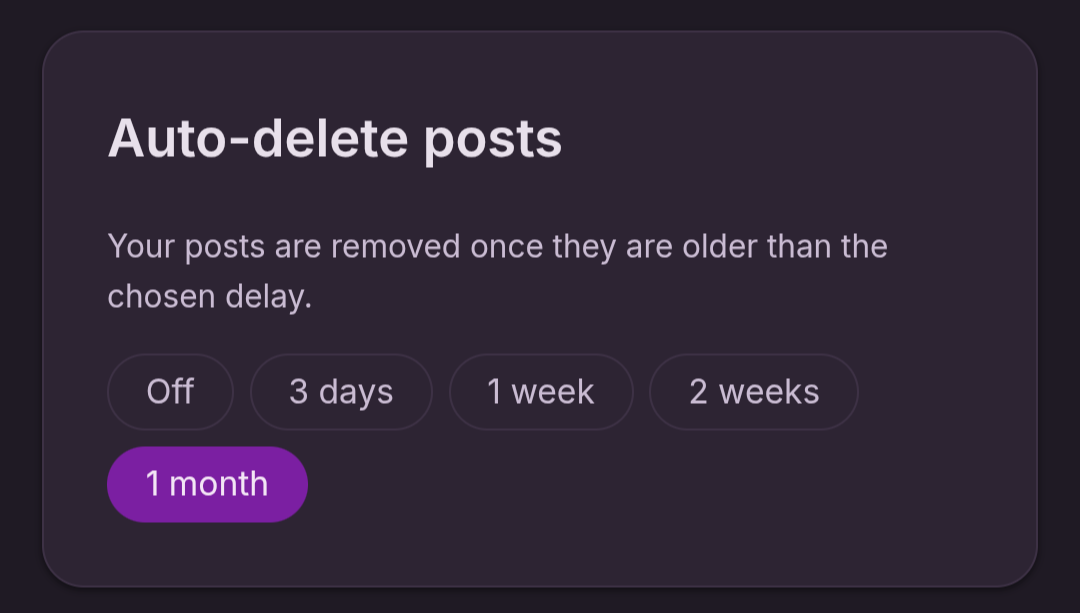
- An option to automatically delete your own posts
FediHood lets you build timelines based on people near you and on topics. More: https://fedihood.social/about
PS: feel free to share
Alt...
The FediHood announcement post, showing two emoji reactions below it.
Alt...
The auto-delete posts setting, with duration options from three days to one month.
Alt...
The appearance settings, with theme presets and custom color options.
Thank you, friends!
The instance held up perfectly, without flinching! I also took advantage of the surge to identify a few areas for improvement, and they've been pinned down. New patches will be rolled out over the next few days.
The release is getting closer and closer...
...and this is how it's doing, while many of you are boosting, replying, etc:
  PID USERNAME PRI NICE   SIZE   RES STATE       TIME   WCPU    CPU COMMAND
 7745 little    35    0   620M  152M RUN       140:14 57.71% 57.71% littlefedi-armv6
Crazy, isn't it?
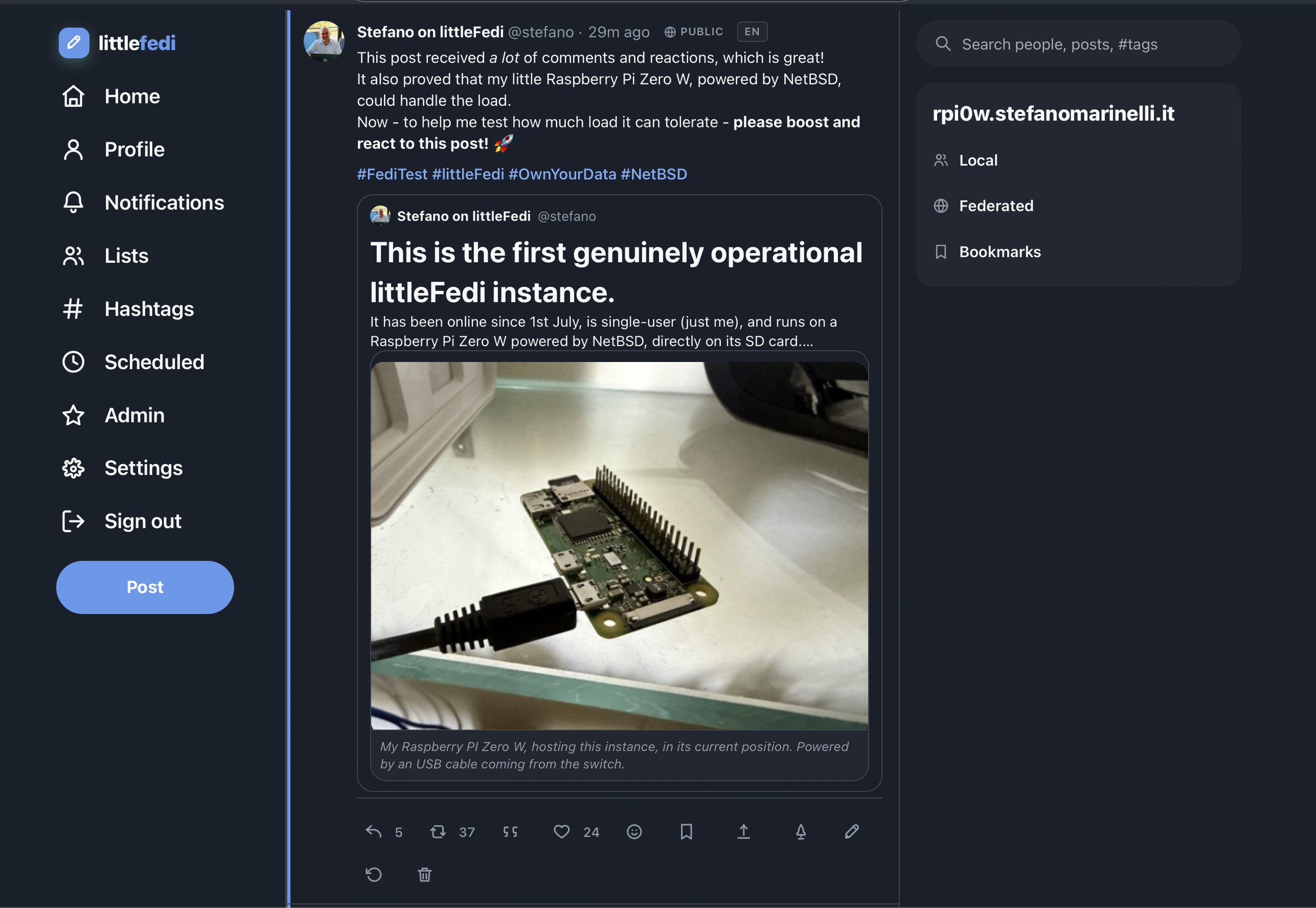
RE: https://rpi0w.stefanomarinelli.it/@stefano/01a0448d-c9e8-7b7e-a225-b22fc0333f0f
Mastodon is great. But littleFedi, snac, GoToSocial, Mitra, Akkoma, etc. - they all share a mission: make sure people will be able to self host their instances without investing a huge sum.
#Fediverse #Mastodon #littleFedi #snac #GoToSocial #Mitra #Akkoma
Yesterday’s post received an unexpected amount of appreciation, and the little Raspberry Pi Zero W didn’t even flinch.
#littleFedi #Fediverse #OwnYourData #NetBSD
Alt...
Screenshot showing the post’s engagement figures: 51 replies, 672 boosts, 55 quotes, and 890 favourites. For each reply, it re-generated the blog, too.
Yesterday’s post received an unexpected amount of appreciation, and the little Raspberry Pi Zero W didn’t even flinch.
#littleFedi #Fediverse #OwnYourData #NetBSD

Alt...
Screenshot showing the post’s engagement figures: 51 replies, 672 boosts, 55 quotes, and 890 favourites. For each reply, it re-generated the blog, too.
RE: https://rpi0w.stefanomarinelli.it/@stefano/01a03e3d-1e73-7928-b396-db17b7f0f60b
Own Your Data!
#littleFedi #Fediverse #OwnYourData
This is the first genuinely operational littleFedi instance.
It has been online since 1st July, is single-user (just me), and runs on a Raspberry Pi Zero W powered by NetBSD, directly on its SD card.
It consumes just under 1W.
Its database is this size:
-rw------- 1 little wheel 109289472 Aug 26 15:14 littlefedi.dbThat is, just a little over 100 MB. Yes, MB.
Its average CPU load is extremely low.
It is perfectly usable both from the web interface and from Mastodon API apps.
I have 179 followers and 169 followings, and it doesn't bat an eye.
I promise myself to use it more, and I will.
You don't need Big Tech to communicate with others.
You don't need an expensive data center to exist online.
Because we are people, and the bits are just extensions of our voice.
#littleFedi #Fediverse #OwnYourData
Alt...
My Raspberry PI Zero W, hosting this instance, in its current position. Powered by an USB cable coming from the switch.
This is the first genuinely operational littleFedi instance.
It has been online since 1st July, is single-user (just me), and runs on a Raspberry Pi Zero W powered by NetBSD, directly on its SD card.
It consumes just under 1W.
Its database is this size:
-rw------- 1 little wheel 109289472 Aug 26 15:14 littlefedi.db
That is, just a little over 100 MB. Yes, MB.
Its average CPU load is extremely low.
It is perfectly usable both from the web interface and from Mastodon API apps.
I have 179 followers and 169 followings, and it doesn't bat an eye.
I promise myself to use it more, and I will.
You don't need Big Tech to communicate with others.
You don't need an expensive data center to exist online.
Because we are people, and the bits are just extensions of our voice.
#littleFedi #Fediverse #OwnYourData
Alt...
My Raspberry PI Zero W, hosting this instance, in its current position. Powered by an USB cable coming from the switch.

Jeśli chcesz mieć prognozę pogody dla swojej okolicy bezpośrednio na osi czasu w Fediverse, zajrzyj do FediMeteo.
Każda obsługiwana miejscowość ma własne konto. Wystarczy obserwować najbliższą, a prognozy będą pojawiały się bezpośrednio na Twojej osi czasu. Bez instalowania kolejnej aplikacji i bez otwierania strony internetowej za każdym razem.
To mały projekt zbudowany wokół Fediverse i otwartych standardów, a kolejne miejscowości są stopniowo dodawane.
Jeśli uznasz go za przydatny, follow, boost albo po prostu powiedzenie o nim komuś innemu to chyba najlepszy sposób, żeby pomóc dotrzeć do kolejnych osób.
Too far ahead of her time, too independent for show business.
But she left behind masterpieces like this one, which have kept me company for many years.
Good morning, #BSDCafe!
Good morning, #illumosCafe!
Good morning, #Fediverse!
https://song.link/s/28pVz3JvJQkfpOHs2oQWhn
#Music #JukeBox #MastoMusic #MastoRadio #FediMusic #FediRadio
Hvis du vil ha værmeldingen for området ditt direkte i Fediverse-tidslinjen, kan du ta en titt på FediMeteo.
Hvert sted som støttes har sin egen konto. Følg bare den som er nærmest deg, så dukker værmeldingene opp direkte i tidslinjen. Ingen ekstra app og ingen nettside du må åpne hver gang.
Det er et lite prosjekt bygget rundt Fediverse og åpne standarder, og nye steder blir lagt til etter hvert.
Hvis du synes det er nyttig, er en follow, en boost eller bare å fortelle noen andre om det sannsynligvis den beste måten å hjelpe flere med å oppdage det.
If you live in the UK and would like to have the local weather forecast directly in your Fediverse timeline, have a look at FediMeteo.
Each supported place has its own account, so you can simply follow the one nearest to you and get the forecast without installing another app or visiting another website.
It is a small project, built around the Fediverse and open standards, and new places are being added over time.
If you find it useful, feel free to follow, boost, or tell someone else about it. That is probably the best way to help more people discover it.
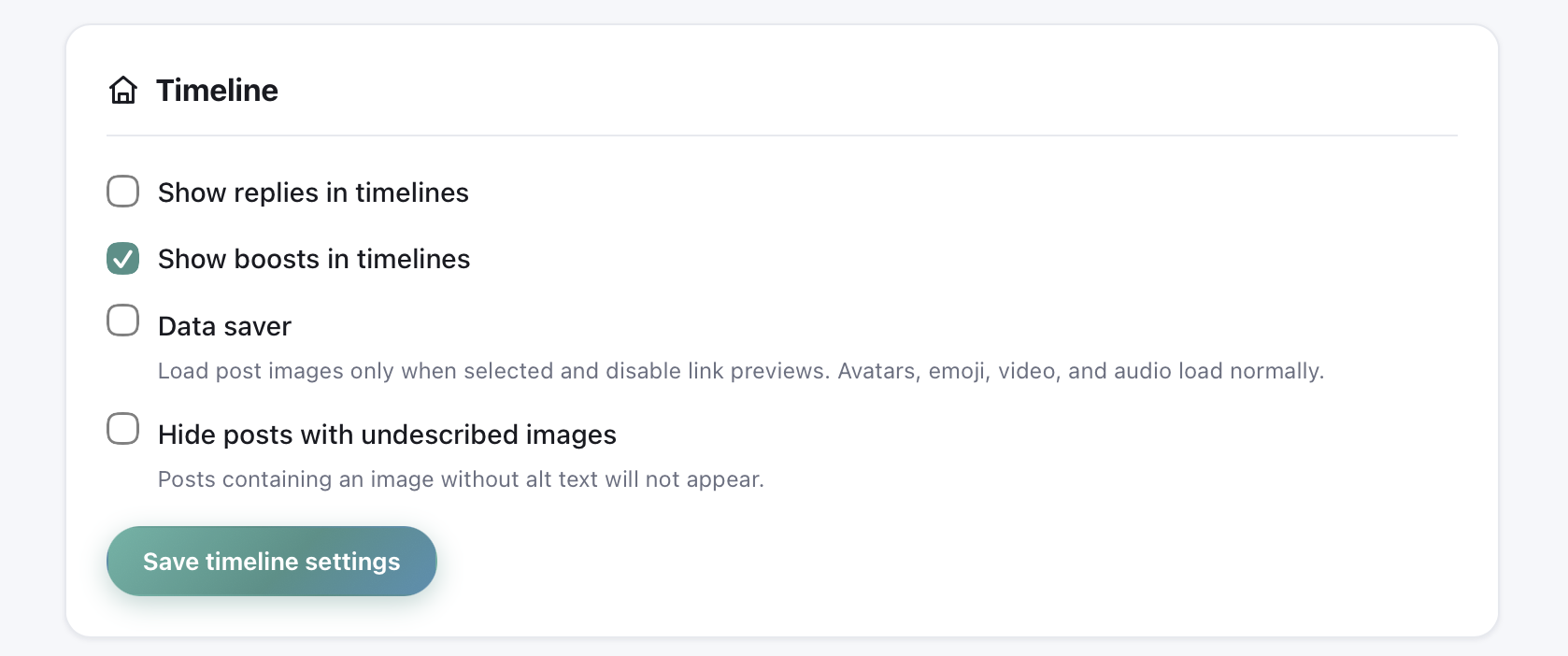
littleFedi allows you to hide all posts that have images without alt text.
Because yes, that's how it should be.
#littleFedi #littleOne #Fediverse
Alt...
Screenshot of the "Timeline" settings menu in littleFedi, showing checkboxes for timeline preferences, including "Hide posts with undescribed images".
littleFedi and your data
Several people have asked me the same thing over the past few days, in different words but with the same question underneath: "if I set up a littleFedi instance, or open an account on one that is already running, what ends up stored somewhere?".
It is a fair question and it deserves a precise answer. So I went back and reread the code, the database schema and the default configuration, and what follows is what I found. Including the parts I do not like, and the parts no fediverse software can solve.
One premise that applies to everything else: littleFedi is a binary running on a server. Whoever administers that server has access to the database. This is true for littleFedi, for Mastodon, for snac, for GoToSocial, for anything. The difference is how much that database holds, and how much of it leaves for the outside world without anyone asking.
The database holds the obvious things: username, display name, bio, avatar, header image, the key pair that is the account's ActivityPub identity, posts, favourites, follows, blocks, mutes, bookmarks, lists, filters.
Then the preferences: theme, interface language, default post language, default visibility, which notifications you want by email, which by push. Functional stuff.
Email is optional. require_email is false by default: on a single-user instance you can leave it out entirely, and on a multi-user one it is the operator who decides whether to require it. If you do provide it, it is used for verification, password reset and the notifications you chose. Nothing else.
The password is hashed with bcrypt. The TOTP secret, if you enable the second factor, is encrypted at rest, not stored in the clear.
And here is something I want to say because it was a deliberate choice: every bearer token is stored as a SHA-256 hash, never in the clear. Session tokens, OAuth access and refresh tokens, application client secrets, password reset tokens, email verification tokens. Anyone who walks off with a copy of the database does not walk off with reusable credentials.
We did a cleanup on exactly this just yesterday. The sessions table had been carrying a legacy token compatibility column for a long time, inherited from an older schema. It held nothing dangerous, because the function that creates sessions was writing the hash into it rather than the browser token, and I checked that this is the only path that leads to an insert. But the guarantee lived in one line of Go, not in the schema. A line of Go can be removed by accident; a column that does not exist cannot. So I dropped the column with a migration, and now there is simply nowhere in the sessions table for a token in the clear to end up.
There is exactly one place where an IP address ends up
The sessions table. When you log in, littleFedi saves the session row with: hashed token, creation date, expiry, User-Agent and IP address.
It serves one purpose: the Settings > Sessions page, where you can see your active logins and revoke them one at a time. It is your data, shown to you. There is no admin screen listing users' IP addresses, and we did not write one on purpose.
Sessions last 30 days and are removed by automatic maintenance when they expire, along with the push subscriptions attached to them.
What is not saved, and what other software does save:
- No registration IP. Until yesterday the registration struct had a field for the IP and one for the User-Agent that nobody ever read: the data arrived inside the function and died there, without touching the database. We took them out. I did ask myself whether it was worth actually recording it, the way Mastodon does, and the answer I arrived at is no. There is really only one use case, the wave of fake accounts created in bulk, and in that case you already have the data: a freshly registered account that is spamming has an open session, and that session holds the IP and the User-Agent. Someone who registers and never logs in is not spamming. On top of that the IP is a weak signal in itself, between CGNAT, mobile carriers and VPNs, while invites, manual approval and email verification are real defences. And unlike the session, which expires in 30 days and disappears, a column like that would stay attached to the account forever: one more entry in the privacy policy, one more target in a breach, and one more thing someone can come asking for with a stamped piece of paper. On a single-user instance it would mean nothing at all.
- No last-login IP on the account. Only the session, which expires.
- No IP history. Close the session and that row is gone.
- The per-IP rate limiter does exist, but it keeps its counters in memory only and cleans them up by itself. It never touches the disk.
What about cookies?
Five, all first-party, all functional:
session (HttpOnly, SameSite=Lax, Secure when you are behind HTTPS, 30 days), pwreset_token (lives 15 minutes during a password reset), locale, theme, appearance.
There is nothing else. There is no analytics cookie because there is no analytics.
Zero third parties
What the code does not contain: Google Analytics, Matomo, Plausible, Sentry, a CDN, a remote font, a third-party script, a pixel, a beacon. And, old-fashioned as it may sound, there is no AI listening in and offering suggestions.
The default Content-Security-Policy is default-src 'self' with a nonce for inline content. Pages load only what your own instance serves. If someone tried to slip an external resource in tomorrow, the browser would block it on its own.
There is not even an update check phoning home. littleFedi does not know you exist and I have no way of finding out.
The only connection to a server of mine is the commercial Big Tech domain list, still empty, (https://littlefedi.org/lists/commercial-bigtech.csv), which is downloaded only if you turn that block on, and it is off by default. It is a download of a CSV of domain names: it sends nothing about you, and you can point the same option at your own list or at a mirror.
The /metrics endpoint is disabled by default.
What about logs?
Here I owe you the whole truth. The access log is on by default and writes one line per request: method, path, status, bytes, duration and remote address.
High-volume, low-value requests (static assets, proxied media, /health, /metrics, /robots.txt, the service worker) are logged at debug level only, so at the default info level they stay silent. But pages are logged.
It goes away with one line:
[observability]
access_log = false
And retention is not littleFedi's call: those lines end up wherever your init system sends them, journald or syslog or anything else. It is the operator who decides how long they stay. In the policy template I ship I suggest 14 days as a starting point.
As for media?
EXIF metadata on uploaded images is stripped by default (strip_exif = true). Orientation is preserved because it is baked into the pixels before the rewrite, so the photo does not end up sideways.
With one honest caveat: the rewrite only happens for JPEG and PNG. GIFs are deliberately left untouched, because rewriting them would flatten the animation, and WebP files are not rewritten because the library I use has no WebP encoder. In practice: if you upload a WebP with GPS coordinates inside, those coordinates stay. I am saying it plainly because it is better to know than to find out. We will look at it later on.
File names are randomised (rename_media = true), so IMG_20250812_my_coffee.jpg does not become a public URL.
And then there is the thing I am proudest of, which is on by default: the remote media proxy.
proxy_remote = true. When an image, an avatar or an emoji living on another server shows up in your timeline, your browser does not contact that server. It contacts your instance, which streams it through. The result is that the remote instance does not see your IP address, does not see your User-Agent, does not see what time you read that post, and cannot use an image as a tracking pixel.
Proxy URLs are HMAC-signed and regenerated on every response, never stored anywhere. And cache_remote is off by default: the stream is passed through and that is it, without keeping other people's media on your disk. If you would rather keep them to cut down on traffic there are the lazy and eager modes, but that is your choice, not a default you find yourself saddled with.
I will add the security headers, which are privacy too: X-Frame-Options: DENY, X-Content-Type-Options: nosniff, Referrer-Policy: strict-origin-when-cross-origin (meaning: when you click a link to the outside, the destination site does not see which exact page you came from), HSTS when you are behind TLS.
But there is also the part no software can fix.
Which is to say, it is time for the uncomfortable section, and it applies to littleFedi just as it does to any other ActivityPub implementation. If someone tells you otherwise, they are selling you something that does not exist.
Public posts are public. When you publish, a copy is delivered to every server that has at least one of your followers, and to every relay your instance is connected to. Those copies are on machines you do not administer. There is no way to call them back.
Direct messages are not end-to-end encrypted. In the fediverse a DM is a post with direct visibility. It sits in the clear in your instance's database and in the clear in the recipient's instance database. Whoever administers either server can read it. Do not use fediverse DMs for anything you would not put on a postcard. This applies to littleFedi, it applies to Mastodon, it applies to everyone. We are thinking about a way to encrypt DMs between littleFedi instances, but that could not apply with other software, and it risks giving a false sense of security.
Followers-only is a convention, not a lock. You tell the remote server "this is for followers only". The remote server, if it is honest, respects that. If it is not, no amount of encryption is going to stop it.
Deleting means asking to delete. littleFedi sends Delete activities to peers and has a queue with retries. If a peer is offline, or uncooperative, that copy stays where it is. That is a limitation of the protocol, not a bug.
And what if I delete my account?
I wrote this part carefully, because it is where a lot of software pretends.
When an account is deleted, a single transaction removes: posts and boosts, polls, options and votes, notifications (both received and generated), mentions, favourites, emoji reactions, bookmarks, link previews, home feed rows, attachments, filters and filter keywords, scheduled posts, push subscriptions, OAuth tokens, sessions, lists, followed tags, featured tags, blocks and mutes (in both directions), follows (in both directions), relays, read markers, personal domain blocks, password resets, email verifications, digest state, MFA recovery codes, exports, imports, reports, generated invites, and finally the account row itself. Counters on other accounts and other posts are recalculated, not left out of sync.
The actual files, meaning media, export archives and import archives, are deleted from storage, whether that is a local disk or S3.
What stays, and I am saying so explicitly:
- Tombstones. A row with a URI, the original type and a date. They exist so that deleted content is not resurrected when a peer offers it back to us. The ones for posts have a configurable retention, 90 days by default. The one for a deleted actor stays indefinitely, but it holds nothing but URI, type and date.
- The moderation log. Administrator actions stay, because an audit log you can delete is not an audit log. The template suggests 2 years.
Deletion has a window: peers are notified first, then it is finalised. There is a deadline past which it is finalised anyway, because at that point the right to erasure of someone who is here outweighs an unreachable peer.
But you can take your data with you.
There is the account export: a ZIP with account.json, the media index and the media themselves. It is served with private, no-store, it has an expiry, and a cleanup job removes it from storage. The template suggests 24 hours and a single download.
There is the import, which accepts the same format. And there is migration to another instance. The archive uploaded for an import is deleted as soon as the import succeeds.
What if you use littleMesh?
Anyone running an instance behind NAT with littleMesh has one more surface, and I want to be precise here too, because it is already written in the documentation.
The lighthouse relays encrypted circuits. It does not read the contents, it cannot impersonate a node, and it has neither the mesh key nor the actor key. But it does see which node IDs open circuits to which, with what sizes and what timings. littleMesh solves reachability, not anonymity. If anonymity is what you need, an onion service is the right tool, not this one.
The HTTPS gateway is a different matter: it is the one terminating TLS for non-mesh servers, so it sees the traffic. That is written in the trust table in the documentation, in plain terms, along with what it can and cannot do.
The default exposure is federation: discovery, inboxes, objects, actors and public media get through. The web interface, the authentication pages, the Mastodon API and the media proxy do not.
Retention defaults, all in one place
What
Default
Sessions
30 days, then removed
Remote posts
30 days (prune_remote_statuses_after_days = 30)
Remote media cache
disabled; if enabled, 720 hours
Terminal jobs
24 hours
Post tombstones
90 days
Your own posts
never, unless you ask
Moderation log
indefinitely
Access log
your system keeps them, not littleFedi
You can have your own posts pruned automatically, by age and with like and boost thresholds, if you want a timeline that forgets. And there are self-destructing posts with a per-post timer. But those are things you choose, not things I decide for you.
There is something the software cannot do in your place, though
If you open an instance to other people, the code cannot write your privacy policy for you. It cannot decide the lawful basis, the jurisdiction, the subprocessors, the policy on minors, the breach notification timelines.
That is what docs/instance-policy-template.md is for: an operator checklist with a starting retention table and a list of what an honest privacy policy has to cover, namely federation of profiles and posts to independent servers, caching and proxying of remote content, email, push endpoints, logs, moderation records, backups, exports, imports, tombstones, where the data lives and how people exercise their rights. It is not legal advice and does not claim to be.
Moderation, privacy and security contacts, the rules and the terms of service are published from the admin console without restarting anything, and they land on /about, on /terms and in the instance APIs.
In two lines...
...littleFedi collects what it needs to work and nothing more. One IP address per session, shown to you and revocable by you. No analytics, no telemetry, no third parties, no phoning home. We do not know how many of you there are or who you are, and we have no interest in finding out. EXIF stripped by default, remote media proxied by default, metrics off by default, secrets hashed at rest, deletion that actually deletes.
And then there is the fediverse, which is a publishing protocol. What you put on it in public is public, DMs are not encrypted, and deleting is a polite request to other servers. littleFedi does not change that and neither does anyone else. Once you know it, you can live with it perfectly well.
#littleFedi #littleOne #Fediverse #OwnYourData

Alt...
littleFedi Logo
Strangers
I keep a terminal window open most evenings, more out of habit than need, tailing the access log of one of the littleFedi test instances while I think about something else entirely. That's how I noticed it the first time: a fetch from a Threads host, correct in every way ActivityPub asks it to be, asking for someone's outbox.
Nothing wrong with it, technically. And yet I sat there for a while, thinking about the person behind that account, and whether they'd have wanted a company that size reading what they wrote, simply because the protocol says anyone can ask.
So we built a way to say no, but only to strangers, not to friends.
An instance still federates in the open by default, the way ActivityPub expects, because that's what almost everyone wants and I wasn't going to take it away from them. What changed is that an admin can now flip to an exact-host allowlist, from the console or from the command line, and it happens immediately, the switch is simply true the moment you set it. Once it's true, reads on posts, on the followers list, on the outbox, all start asking for a signature, and only the hosts you've named get an answer back. Discovery stays open regardless, because a peer that doesn't know you exist yet still needs a way to find out, before it can even be told no.
I went back and forth for a long time on what should happen to a peer once you remove them, or once you switch the whole instance back to open. In the end nothing gets deleted, not the account, not the relationship, not a single post or piece of media or anything cached from them. Traffic stops, that's all. I've never liked the idea that moderation means destroying what someone wrote, as if the words themselves were the problem and not who gets to see them.
There's a list, if you want it, of the big commercial names, the ones like Threads that started this whole conversation. It updates once a day over HTTPS, quietly, and if the update fails it just keeps yesterday's copy instead of leaving your instance with nothing. But whatever an admin decided on purpose always wins. Allow someone by hand and the list can't undo it. Suspend someone by hand and even an allow can't undo that either.
If you're bringing a block list with you from somewhere else, plain text works, CSV works, and so does the Mastodon export with all its fields, severity and everything. Ten thousand rows at most, checked before a single one is written, and you get to look at what's about to happen before it happens.
One thing I'll admit, since it will trip someone up eventually: matching is on the exact host. A peer that splits its actors and its inboxes across different addresses needs every one of them on the list, not just the one that looks like the main domain. It's the kind of mistake that fails closed instead of open, which is the direction I'd rather be wrong in, but it's still a mistake waiting to happen, so it's the first thing in the documentation.
I still think about that line in the log sometimes. A small server should get to say no to a stranger.
Now it can.
The sad, yet fascinating thing about our job is that when done right, nobody notices.
Have a great start to the week, #BSDCafe!
Have a great start to the week, #illumosCafe!
Have a great start to the week, #Fediverse!

Wait, what? 👀
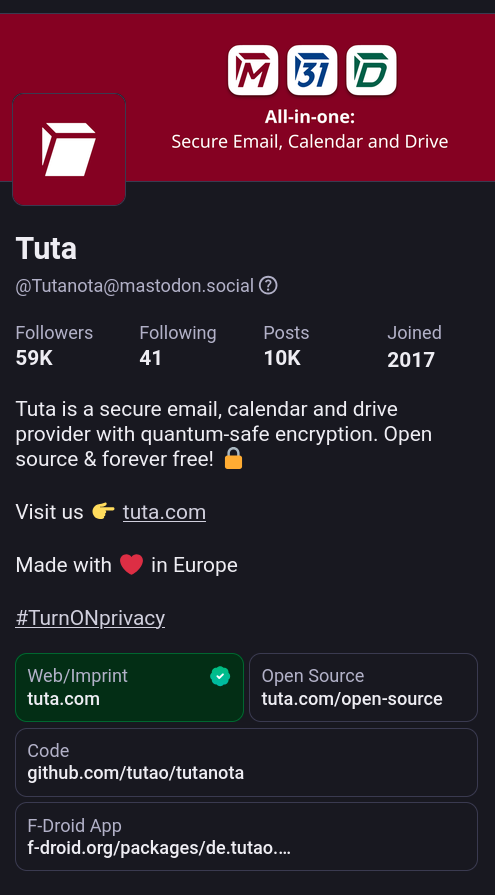
59k followers on the Fediverse?! Make it 60k! 😻
Go #Fediverse
Alt...
Screenshot of the Tutanota Mastodon profile with 59k followers

I just adjusted my relay instance which now also finally supports #GoToSocial! Of course, it also supports Pleroma, snac, Mastodon, littlefedi, starling and many other ones!
With relays, your own posted content gets distributed to all connected instances, as well you get the content all other instances. Currently, mostly tech related instances are connected, focusing on #Linux, #Proxmox, #BSD / #FreeBSD, #IPv6 and many other things!
More information at: https://fedi-relay.gyptazy.com
#socialmedia #fedi #fediwall #fediverse #activitypub #activitypubrelay #relay #social #snac #snac2 #mastodon #gts #gotosocial #littlefedi #pleroma #misskey #services #devops #starling #tech
There are days when the main goal is just to make it to the evening without falling apart... today is one of those days 😄
Have a great day, #BSDCafe!
Have a great day, #illumosCafe!
Have a great day, #Fediverse!

Find real people to follow across the fediverse with similar interests!*
Linux: https://fediverse.info/people?topics=linux
Art: https://fediverse.info/people?topics=art
Nature: https://fediverse.info/people?topics=nature
* - People have consented and self-submitted themselves, via the #fedi22 hashtag in bios, you can verify that yourself. Long live consent driven discovery ❤️
Another step closer to release!
The official website is now live at https://littlefedi.org/ with documentation and project details.
Take a look and let me know what you think!
Another step closer to release!
The official website is now live at https://littlefedi.org/ with documentation and project details.
Take a look and let me know what you think!

Dear #fediverse friends, I HAVE SUCH AN EXCITING ANNOUNCEMENT!!
🥳🥳 Per Oct 1st, I'll be starting as Head of GovTech at the best #opensource company: @openproject 🥳🥳
And best of all, it's a 100% remote role, SO I'LL FINALLY GET TO MOVE ABROAD 😭🌞
It's bittersweet leaving @BZKopensource . I've had a great time there with @bo , @PeterGiskes , @marlenabcn , @johan , @manfredzielinski , @tomootes and many others. Fortunately we'll still see each other at conferences ❤️
Blog: https://ginaplat.com/en/posts/20260810-goodbye-ospo-hello-openproject/
Good night, Fediverse.
May the glow of this moon and the peace of this sea soothe and illuminate your life, even when the light is dim and the path ahead of you seems dark.
#Photography #Photo #Sea #Goodnight #Fediverse

Alt...
A bright moon glows in a deep night sky, casting a shimmering ribbon of silver light across calm, dark waters. On the left, a rugged breakwater of pale, moonlit stones extends into the tranquil sea, where quiet figures sit peacefully under the vast night horizon.

Het leuke aan de #Fediverse (waar Mastodon ook onderdeel van is) is dat er steeds nieuwe oplossingen bij komen, die aanhaken in het grotere geheel. Vaak zijn het proefballonnen en komt het merendeel niet echt van de grond.
Ben nu #littleFedi van @stefano aan het testen en kan oprecht zeggen: wow 🤯
Het zou een lichtgewicht implementatie moeten zijn en de software is nog in de testfase, maar voelt nu al beter in elkaar gezet dan Mastodon. Supervriendelijke interface, focus op de dingen die er daadwerkelijk toe doen zodat je minder ruis hebt. Gelijktijdig heeft het een geweldige optie voor kennisdeling, zoals een ingebouwde blog. Zo kun je "vlugge" posts maken (inclusief self-destruct per bericht!), maar ook zaken die je voor de langere termijn wil bewaren, opslaan als blogpost.
Veel software: 😡 🤮
littleFedi: 😍
Dit is hoe software hoort te zijn: focus, simpel, handige opties.
Helaas is het nog "invite-only", maar voor iedereen die overweegt om een eigen installatie op te willen zetten, hou littleFedi in de gaten.
Bij deze meteen een test om te zien als ik naar mijn eigen profiel link:
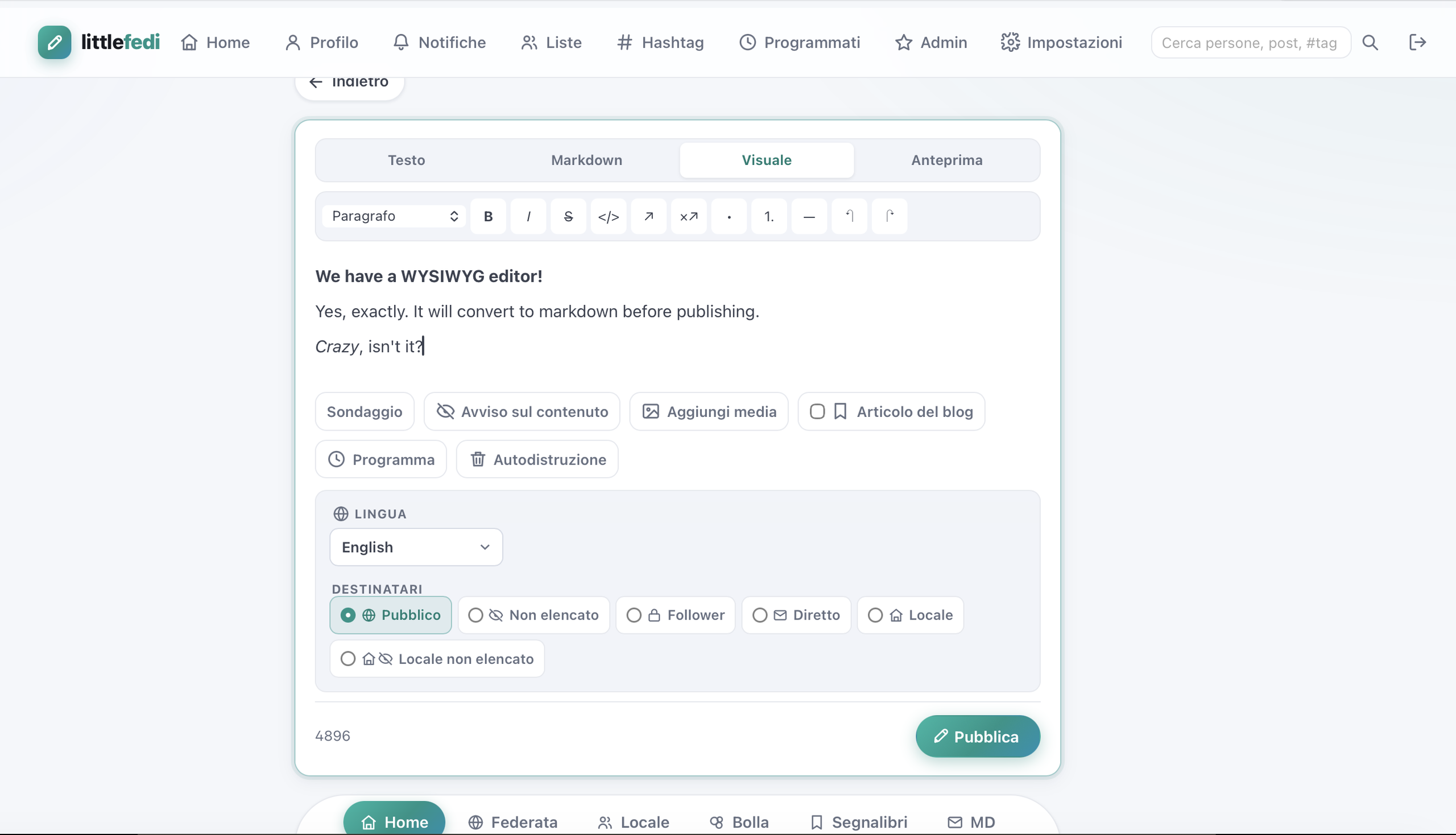
Everyone loves text formatting, but not everyone loves Markdown.
We've got you covered.
I'm merging a branch that includes a WYSIWYG editor, which will translate the output directly into Markdown.
No more tags to remember when writing your next post (or blog post), just a convenient, predictable editor.
What do you think?
Alt...
Screenshot of the littlefedi post composer interface, showing a WYSIWYG editor tab selected under the "Visuale" option.
littleFedi media management
Are you worried that your low-power device will be overwhelmed by external media caching?
Don't worry, we've already thought of that!
littleFedi offers 4 media management options:
- "No caching, no proxying": Media is fetched directly by the user from the originating instance.
- "Proxy only mode" (like this instance): The instance proxies requests so media is always served to the user through it. The originating instance will never see littleFedi users' requests.
- "Lazy caching mode": Requests are proxied and then cached locally, so subsequent requests are served directly from the local cache.
- "Full caching mode": Similar to Mastodon, it fetches and stores media locally as soon as it is processed by the instance.
For both caching modes, you can store media locally or use an external S3-compatible service. Moving between storage types is supported natively, without needing external tools like rclone.
New littleFedi build on littleOne
littleFedi 26.08.09 - the changes in this build compared with the previous
deployment.
Followed hashtags in the main navigation
Your followed hashtags are now one click away: a Hashtags entry (with a
hashtag icon) has been added to the desktop navigation bar and the mobile
account menu, pointing at /tags. The label is translated in every supported
language.
Blog posts show a link back to their permalink
Posts that have been published to the blog now carry a small Blog chip in
the status meta line. It links to the post's readable permalink
(/@user/blog/<slug>/) and works on timestamps and boosts, so readers can jump
straight from the timeline to the polished blog version of a long post.
Status meta line reworked
Every marker on a status - visibility, language, blog chip, expiry - is now
rendered as the same uniform chip in a single wrapping flex row, instead of a
mix of right-aligned inline boxes. Posts that carry several markers read as one
neat line rather than a ragged stack. The Ink and Roost themes were adjusted to
match.
Robustness: orphaned-account posts no longer break the page
Previously a post whose author account no longer resolves (a purged account, or
a partially hydrated cache entry) could fail the whole timeline render. Now any
status - including the target of a boost - whose author is missing is silently
skipped. Covered by a new test.
Icon updates
- Catch-up view and its navigation entries now use a VHS icon instead of the
old sparkle (thank you for the suggestion, @shom@littleone.littlefedi.social ). - The "redraft" action gets a proper undo icon.
- The Appearance and Blog appearance settings sections get a palette
icon. - New hashtag icon for the navigation.
Blog theming fixes
- Proper spacing restored for non-paragraph content in the post body: headings,
bullet/numbered lists, horizontal rules and code blocks now breathe instead of
collapsing against each other. - A post with a single attachment now renders a full-width figure (the old
grid left a small thumbnail stranded at the left edge). - The "View or reply in the Fediverse" link is now consistently styled.
- Ledger theme: long code lines scroll inside their block instead of
breaking out past the reading measure. - Marginalia theme: the thread link, replies and pager now align to the text
column on wide screens, and print output was cleaned up.
If you publish a blog, regenerate it so the fixes apply: Settings → Blog
appearance → Rebuild blog now. The blog's style.css is assembled at build
time, so it only picks up these changes when you rebuild.

To say I am excited about #LittleFedi software would be an understatement. What I am seeing from @stefano and the team breaks new barriers for entering in, and participating in, the #Fediverse. Can't wait to test on a self hosted Pi at home. If successful, I shall migrate my long established Mastodon cloud instance to it and serve all from home on local hardware.

Stefano Marinelli (creator of the excellent FediMeteo) is working on a new type of lightweight Fediverse server called "littleFedi".
It's still in its early days and under development, but the first test server is now open and Stefano is gathering feedback about it. More info in the quoted post at https://littleone.littlefedi.social/@stefano/a105002b-5749-437d-a3cd-da54dfa70395 and more detail at https://littleone.littlefedi.social/@stefano/4252ae6f-b949-42f8-a021-fd2b698f8b37
You can follow Stefano at @stefano@bsd.cafe or on his littleFedi account at @stefano@littleone.littlefedi.social
#LittleFedi #Fediverse #ActivityPub #SelfHosting
Hi everyone, I'm Stefano
Also known as the BSD Cafe and illumos Cafe barista - @stefano@bsd.cafe and @stefano@illumos.cafe
This is the first post from littleOne (
littleone.littlefedi.social), the first littleFedi instance open to outside users.littleFedi is a new ActivityPub server, still in active development, written in Go and shipped as a single binary. It speaks standard ActivityPub, so it federates normally with Mastodon, snac, GoToSocial, Akkoma and the rest of the fediverse, and it exposes a Mastodon-compatible API, so most existing apps already work with it.
A few things about it that aren't the usual fediverse defaults:
Catch-up instead of an algorithm. Timelines stay chronological, full stop. There's a separate
/catchuppage, visited on demand, that ranks what you missed using only signals this instance already has locally - who you follow boosted it, replies and favourites delivered here, hashtags you follow. No external popularity data comes in, nothing about what you read is tracked. It answers "what did I miss" without turning into a feed that decides for you.Static blogging built in. Any post can be marked as a blog post and gets published as a plain static page under
/@username/blog/, with its own permalink, Atom feed, and no JavaScript or database hit per view, while still being a normal federated post underneath. A proper home for longer writing that doesn't need to compete with a timeline.Self-expiring posts. Any post can be given a timer and auto-delete on its own.
Bubble timeline. A middle ground between local and federated: a timeline scoped to a set of instances you've chosen to group together, not just your own or everything.
littleMesh. A way to federate without a public domain, certificate, or open port at all - meant for something like a Raspberry Pi behind NAT. Instances get an address derived from an Ed25519 key pair and reach each other through pinned relays that never see plaintext.
No trends, no suggestions. These are intentionally left empty. Nothing here is trying to surface "popular" content or keep anyone scrolling longer.
Security defaults taken seriously. Signed federation (HTTP Signatures), optional Object Integrity Proofs, TOTP MFA, audit logs, and full account export, migration and deletion if you ever want your data to live somewhere else.
This instance is here to test all of that with real accounts, not just a small group ones'. In the next few days I'll be reaching out to everyone who already told me they were interested, to set the first accounts up - an invite is coming. If you'd rather just follow along and see how it goes, that works too.
It's a test instance, so expect the occasional rough edge. If something breaks or feels wrong, tell me - that's exactly what this phase is for.
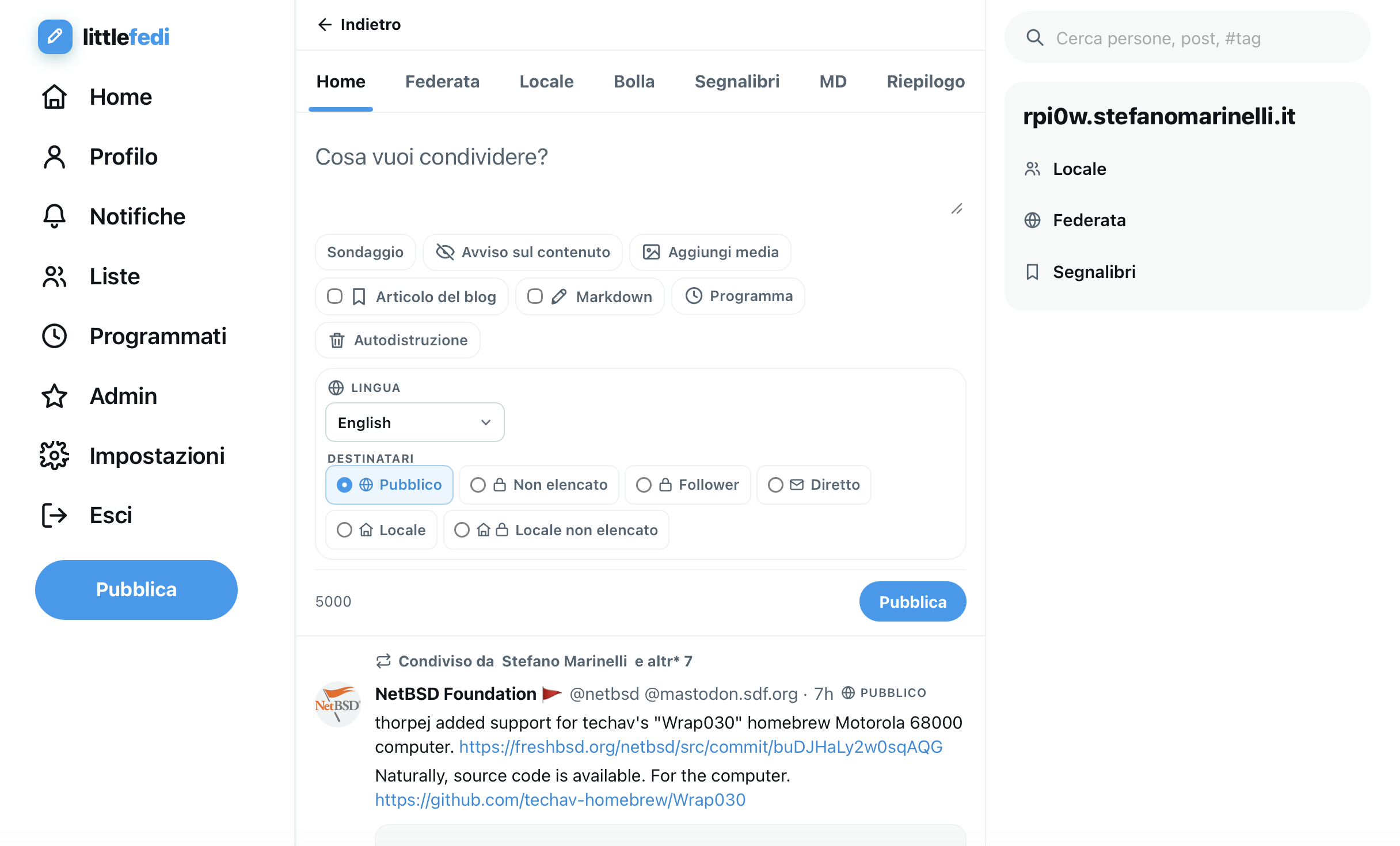
Some friends are joining the Fediverse from other social networks and have fond memories of the old Twitter days. We thought of you, and we’re now merging the branch that brings theming support!
Soon, on littleOne, you’ll be able to choose from a selection of predefined themes.
Stay tuned!
#littleOne #littleFedi #Fediverse
Alt...
Screenshot of the littleFedi web interface in Italian, showing a three-column social timeline layout with a left navigation sidebar, central post composer and feed, and a right sidebar for search and timeline shortcuts. The clean white-and-blue design, rounded buttons, tabbed timelines, and overall structure strongly recall the classic pre-X Twitter web interface.
littleFedi: a Fediverse Server That Doesn't Need a Data Centre
I was fifteen, and there were no BBSes in my city. So every call was long distance, once a day, sometimes twice. I'd start the dialer and wait for that sound - the handshake, the negotiation, the hiss settling into a carrier - and then I was connected to a computer sitting in somebody's bedroom, a few hundred kilometres away. I was a co-sysop of a local board and a national moderator of a FidoNet area. None of my friends understood what I was doing, and they'd stopped asking to avoid an incomprehensible monologue. But I liked it, and that was enough for me.
Here's the thing about that computer in someone's bedroom. There was no data centre. No domain, no certificate authority, no hosting provider, no cloud. Just a machine, a phone line, and a person who'd decided to run it. If you wanted to reach it, you called it.
Now look at what it takes today to put a small server on the network so other people can talk to it. A public address, which most home connections no longer have. A domain, which you rent. A certificate, which somebody has to issue you. And, increasingly, a VPS somewhere, because the software won't fit on the hardware you already own.
We've added a lot of infrastructure between two people who just want to talk. That's what littleFedi is about.
What it is
A single Go binary. No Ruby, no Sidekiq, no Redis, no separate worker processes to babysit. You run init, answer a few questions, and you've got a working instance. It speaks ActivityPub, and it speaks the Mastodon client API well enough that existing apps just work.
It also runs on hardware that would make Mastodon - or even Akkoma - struggle. Most software in this space assumes a VPS with a few gigabytes of RAM and a database server next to it. We assumed a Raspberry Pi Zero W behind a home router. There's a low_power mode that tunes memory use, image decoding and thumbnail generation for exactly that kind of box, and it's tested on that kind of box, not just on a fast dev machine.
In spirit this puts littleFedi close to snac, which I've always liked a lot. Same conviction: a personal server shouldn't need a fleet of services behind it.
Federating without a public address
littleMesh is the part I'm most attached to, and it's the part that goes back to the modem.
Your instance generates an Ed25519 key pair. That key is its identity - the node's address is derived from the public key, so reaching that address means reaching the holder of that key and nobody else. No registrar, no certificate authority, nobody to ask permission from.
A small set of public lighthouse nodes help two instances find each other. Once they're introduced, the traffic runs over a second TLS session pinned to both node IDs. The lighthouse copies encrypted bytes back and forth. It never sees plaintext, and it can't impersonate either side. And if the two nodes can reach each other directly, they drop the relay after the introduction and talk peer to peer.
Which is, more or less, calling the BBS directly. Just without the phone bill.
The gateway into ordinary HTTPS
Mastodon and other regular servers can't resolve a mesh address on their own. There's no domain and no certificate for them to find.
That's what the optional HTTPS gateway is for. A lighthouse operator can run one alongside the relay, and it bridges the mesh into ordinary HTTPS for the rest of the web. The gateway has to terminate TLS to do that, so it can technically see the traffic passing through it. Which is exactly why it's a separate, opt-in piece and not something every node exposes by default.
It has two independent settings: one controls what the gateway lets ordinary internet visitors reach at all, and a second one applies again at the destination node. Left at their defaults, both allow only federation traffic - ActivityPub delivery, discovery, public media. Web login, API and media proxy stay closed unless an operator deliberately opens them.
Mesh peers talking to each other directly never touch the gateway at all. That exposure only applies to the bridge into the wider web. And all of this can be self-hosted.
Chronological timelines
Timelines are chronological. Nothing gets reordered by an engagement model.
If you want something closer to "what did I miss", there's a separate /catchup page you visit on purpose. It ranks posts using signals your own instance already has - how many people you follow boosted something, whether it continues a conversation you took part in. No external popularity score, no telemetry, nothing leaves the machine. You press "mark as read", it moves a divider, and that's the only thing it remembers.
Self-expiring posts
You can set a post to expire, with its own timer, instead of a fixed instance-wide setting.
This isn't a client-side trick that hides the post from view. The expiry goes on the same durable job queue that runs the rest of littleFedi's background work, so the deletion survives restarts and isn't lost if the process happens to be down at the moment the timer fires. When it does fire, the post is deleted and a real Delete activity goes out to everyone who received it - so it actually disappears from remote instances too, not just locally. Editing the post before then can push the timer back or cancel it.
Static blogs, with real threaded replies
littleFedi can take a Fediverse post and publish it as a page on a plain static blog, with its own Atom feed and permalinks that don't move even if you edit the post later. No JavaScript, no database hit on page load.
The part I find more interesting is that the replies aren't left out. If the author turns the option on, littleFedi pulls the public replies that were actually federated to the post, threads them the same way the timeline does, and bakes the whole tree into the generated HTML at build time. So a blog post can show a real comment thread, in the same static file, with the same guarantee as the rest of the page - no JavaScript, no live queries. Only public and unlisted replies qualify, obviously. Anything followers-only or direct never enters the picture.
Why it looks like this
This isn't minimalism for its own sake. It's about how many people simply can't run their own server today, because the requirements are too steep. The hardware, the ops complexity, or just needing a domain and a public address before you can start. We're trying to remove those barriers one at a time, while still shipping a real, federating, reasonably complete server: polls, quotes, scheduled posts, MFA, PostgreSQL and S3 if you want to scale up later.
I've written before about taking a semi-truck to buy salad. Hardware keeps getting more expensive and the software running on it keeps asking for more of it every year. That's backwards. If the machines cost more, the operational cost of what sits on them should go down, not up. Same with complexity: the default direction is to keep adding it, and we'd rather strip it out.
And there's the other half, which is closer to why any of us are doing this at all. It's the same thing that drew me to snac and to the way grunfink works on it, and the same thing that had me dialing a stranger's computer at fifteen. People building tools so that people can talk to each other. Nothing more dressed up than that. We'd rather show the servers running, talk about the Pi sitting in the corner, share a tiramisu photo if it comes up. The joy in this was never about the money it brings in. It's about what we end up building, humanly, because of it.
It's beta software, still short of a first release, and I'd rather say that plainly than oversell it. But it runs, and it federates. That's the part I wanted to write about.
Update since yesterday:
New
- Opt-in federated RSS feed for your account
- Threaded federated replies now show up on static blog posts (merged from an experimental branch - works but not pretty yet, it's a start, watching it closely)
- New followers can require your approval before they're accepted - it was there, just hidden
- Default language, Markdown, and audience settings for new posts (replies/edits/redrafts keep original settings)
- DM button and blog badge on profile pages
Fixed
- Follow/unfollow path
- Video playback
- Search now resolves pasted remote status URLs directly
- RSS/blog reply preferences carry over on account export/import
- Profile pane improvements
All live now. Let us know if anything looks off!
littleFedi works like a real app on your phone
A few people have asked me how to actually use littleFedi on mobile, so let's clear this up. I use MastoBlaster, for obvious reasons. But you don't need to build anything native - littleFedi is a Progressive Web App (PWA), and that means it behaves like a proper installed app once you set it up.
- You add littleFedi to your home screen like any other app
- It opens full screen, no browser address bar, no tabs cluttering things up
- It works offline for the shell of the app, so a dead connection doesn't just throw a blank error page at you
- You get real push notifications, even when the app isn't open
- Static assets load instantly on repeat visits because they're cached on the device
Just your browser doing what browsers are supposed to do.
Installing it
On Android (Chrome or most Chromium-based browsers): open your instance, tap the menu, and choose "Add to Home screen" or "Install app". On iOS (Safari): tap the Share button, then "Add to Home Screen". That's it - the icon lands on your home screen and from then on littleFedi launches like a native app, in its own window, with its own icon and theme color.
Notifications that actually work
This is the part people are usually most surprised by. littleFedi uses Web Push, so once you enable notifications from the settings page, you get real-time alerts for mentions, boosts, favourites, quotes, follows, follow requests, polls ending, and a few other events - each with its own icon so you can tell at a glance what happened without opening the app. Tap a notification and it takes you straight to the right place, or focuses the app if it's already open in another tab.
This works the same whether the app is in the foreground, in the background, or fully closed. The browser's service worker handles delivery even when littleFedi itself isn't running.
Why it feels fast
Static files - the JavaScript, the icons, the stylesheets - get cached on your device the first time you load the app. On every visit after that, they load instantly from local storage instead of going over the network again, and the cache quietly checks for updates in the background so you're never stuck on stale code. Your actual content - posts, notifications, everything tied to your session - always comes fresh from the server, since that's the stuff that has to be accurate and can't be cached.
If your connection drops entirely, you'll see an offline page instead of a browser error, so it's clear what's going on rather than looking broken.
No extra app needed
If you're on mobile and haven't installed littleFedi yet, this is really the way to use it day to day. It's lighter than many native apps, updates itself automatically, and you're not waiting on anyone to approve a release in an app store. Just add it to your home screen and it stays there, working like any other app on your phone.