![[?]](https://m5l.eu/u/marek/s/avatar-ff8999a3b20360a58bc1da5859b98e8a.png)
Well, once I became the person to guess that and I'm simply translating some textures with #Cpp everything is butter smooth again.
Also, I noticed you prefer multiple specialised services, but I don't see anything that would replace my other uses of Nextcloud: non-media files, calendar, contacts, kanban, office suite... As I'm writing this, I'm seeing probably SilverBullet could handle them all xD
My use case for Nextcloud is basically a dropbox to share files with people,Have you tried copyparty?
I have this exact situation, where I have a Pangolin tunnel (used to be Cloudflare before) and everything gets routed there. I'm having a .local domain resolve to the server in LAN, but this requires a self-signed certificate so only my personal devices use it.
![[?]](https://files.mastodon.social/accounts/avatars/110/147/406/665/714/826/original/e34316daa89857ae.jpg)
One of my favorite quotes ever, from why the lucky stiff:
"when you don't create things, you become defined by your tastes rather than ability. your tastes only narrow & exclude people. so create."
![[?]](https://polymaths.social/fileserver/01HCMX6M1CZNEVJ4F5H58TT5XJ/attachment/original/01M4GVVZSEWT13KC280GWBJSF8.png)


 🍵
🍵  [
[Silly #Poll: where are you along the #neckbeard pipeline?
(Note: the neckbeard is metaphorical. No actual facial hair required)
Also, please remember #DanesLaw: no matter how carefully someone attempts to construct a poll, the very first comment will usually expose a glaring oversight. That's just how it goes.
| Windows is fine: | 42 |
| MacOS, 'cuz life's too short for all that mess.: | 135 |
| Linux, because it's faster, and my games run great: | 183 |
| I'm a Linux command line jockey!!: | 349 |
| FreeBSD all the way! LONG LIVE UNIX: | 90 |
| OpenBSD! Security go BRRR!: | 55 |
| Of *course* it runs NetBSD!: | 25 |
| Haiku!! It's so beautiful!!: | 25 |
| Ha, I'm still running Workbench/Aros!!: | 4 |
| I wrote my own OS. I'm on a mission from G-d.: | 20 |
Closed
![[?]](https://sapka.pl/snac/michal/s/avatar-9831552a9898e1be86034c1e69219edb.jpeg)
See it working at https://marsh-sim.github.io/bibliography/
Because everything is written in regular files, the editor can autocomplete citation keys without any special tooling - they are just sections in another file. This kind of interoperability is why simple tools like text files and #ssg are so great.
I'm not a fan of hosting it on GitHub anymore, but there are already links in various places that I can't update, so this is the reasonable thing to do.
I am using it primarily with modal editors. Now #Helix, used to be #Neovim. Works really well with both. Even though the layout is completely different, in modal editors I just reach for the right letter. The only exception are hjkl for movement, but I have arrow keys mapped on homerow in the same way. Not only I don't have trouble with my muscle memory in vim/hx but I also brought it to all other applications :D
https://colemakmods.github.io/mod-dh/keyboards.html#matrix-keyboards
https://github.com/foostan/crkbd/blob/main/docs/corne-cherry/v3/buildguide_en.md
- switching between #Zig versions, I liked it more than the dedicated anyzig
- #Python venv activation – it's silly but feels so good, and collaborates with uv
- ensuring I have the right language server and formatter for a project, be it #Lua, #TypeScript, and trying out various options for Python
- setting LANG="C.UTF-8" only in the specific project folder because #Ansible refused to work with Polish...
The final boss was getting a really comfortable Tree-sitter setup: get the #Rust CLI, write grammar in #JavaScript, re-generate and run tests on source change as a mise Task. And then I only cloned the repo on another machine and was ready to go!
This post was written as a more cultured outlet for my excitement instead of aggresively committing mise.toml into every repository I touch
My ISP was kind enough to give me a learning opportunity in how I can manage access to my homelab. While access to #selfhosting can't be in my place by definition, I can at least have it on a VPS from a local company to resist monopolies :)
Join the fun at: https://paste.sr.ht/~maarrk/2f1125139c62ebc567d15eac5e066a73ef638845
I'm running Forgejo in a container now to isolate SSH access, but I also had it installed directly for some time.
This is what I use now, after #selfhosting Apache SVN, Perforce, Tuleap, RhodeCode, Phorge and Gitea so far.
The other one is forcing the developer to bundle all of the dependencies with the application. It does waste disk space, bandwidth etc. but they are all cheaper than my troubleshooting time and comfort. If and when I need to change some part of the image, I fork and modify it as I would with any other software.
Speaking of sustainability, if the process to update is too difficult and time consuming, the human factor (me) will delay or fail it over long periods of time.
I am not saying that everything should be run in a container, but I will disagree that installing manually is always better either. Not every application is a main character that deserves this work from me, and not every person is a full-time administrator. Docker is just another tool in the toolbox, that happens to offer an attractive compromise for some of my work, but I'd also be happy to be convinced otherwise (as I was until recently).
Live location is very sensitive data, but #selfhosting the server with TLS and basic authentication gives me more privacy than the big tech cloud. And it only needed reading a bit of MDN and making a basic #Docker image based on #NodeJS
npm and make, no sudo install for you two. And leave my /usr/local alone!It was the talk "How to Build Software From Source" from @andrewrk@mastodon.social where someone taught me what build prefix is. I think that's an example of why hanging around #zig language is so beneficial – it also taught me a lot more about building C and libc than any other tool. Many layers of dirt and rust (pun intended) are washed away and you see the basic systems that were under there all the time.
What made me finally try something else than raw pip and venv was easy installing of multiple Python versions. I was completing a PR to a library that (admirably) wants to support the old ones as well. Once I had the tool, I tried it for releasing a new version of my own PyPI package, and I wasn't ready for how fast and convenient it would be.
So far I'm using Nextcloud for everything you mentioned, except notes (@silverbulletmd@fosstodon.org)
git worktree for the rescue:I was working on updating a #cpp project to a newer #Qt version, but wanted to keep comparing to a #git tag from some time ago. The problem is that checking out a different commit changes all the files as far as #CMake is concerned, and everything builds from scratch. If only there was a way to have another copy of the same repo without cloning...
find . -name '*.qml' | xargs sed -i 's/\(import [A-Za-z0-9.]*\)[ ]*[0-9.]*/\1/g'
Which translates to "please remove all versions from import statements in my #Qt QML files"
Jak mam całe zdanie to dużo zgaduję z kontekstu, tak myślę że mógłbym pociąć próbki z bloga i SteMi_J na fiszki po jednym słowie dla Anki (oprogramowania, nie znajomej Anny).
Widzę dużo rzeczy które chcę poprawić, ale wrzucam teraz jako ślad którędy może iść początkujący.
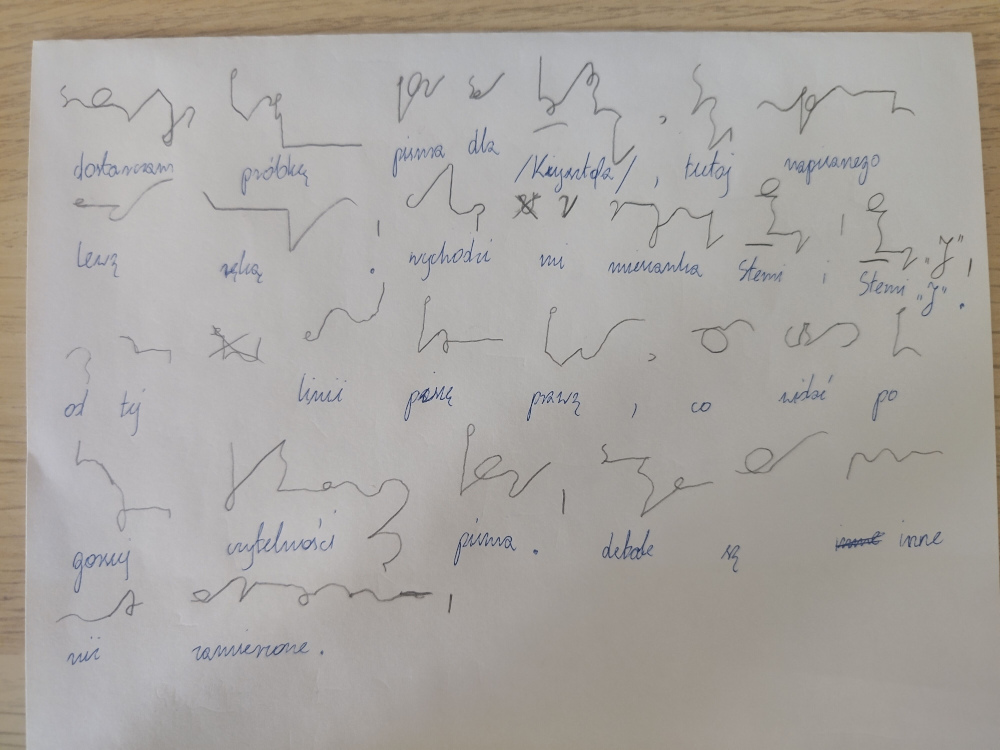
Alt...
Zdjęcie kartki zapisanej stenografią z tekstem: "dostarczam próbkę pisma dla Krzysztofa, tutaj napisanego lewą ręką. wychodzi mi mieszanka Stemi i Stemi "J". od tej linii piszę prawą, co widać po gorszej czytelności pisma. detale są inne niż zamierzone."
Podobny efekt szybkiego uczenia się symboli dzięki relacji głoski dźwięcznej i bezdźwięcznej jest też w sylabariuszach japońskich i tengwarze Tolkiena, i bardzo go doceniam. Przez to że w zasadzie każdy znak jest i tak minimalny, to chyba nie ma dużej wartości w nadmiernej optymalizacji prostoty znaków dla częstotliwości głoski.
Podsumowując, z mojej niedoświadczonej perspektywy, SteMi jest super. Duże uznanie i podziękowania za ciekawe narzędzie.
/.-/...//-.--/---/..-//.../././/.../-/../.-../.-..//--./---/-//../-/ 😉
Tempo pisania na razie niewiele mniejsze niż lewą, może warto by się uczyć równolegle obiema?
...najpierw zaprezentuję nową stenografię. Nową/starą - ale jakże zgrabną, poręczną, którą polecam wszystkim zainteresowanym, szczególnie, jeżeli są praworęczni.https://www.stenografia.pl/blog/2011-01-18_pisanie-prawa-reka-to-proste/
https://www.stenografia.pl/blog/2022-11-20-stenografia_stemi_j/
Boys don't grow up, we just change LEGO to #CAD
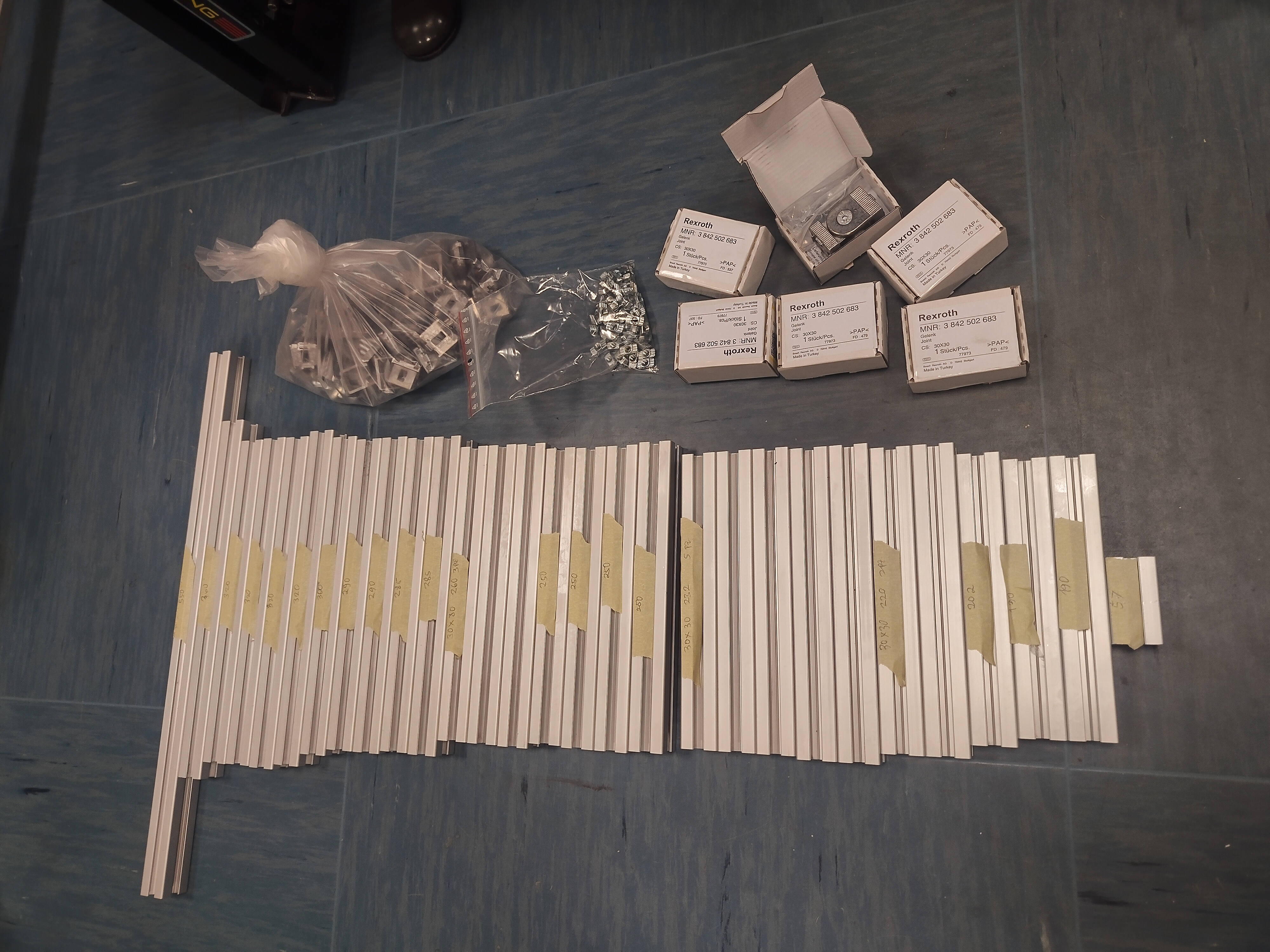
Alt...
Photo of multiple aluminium extrusions and mounting hardware on the floor
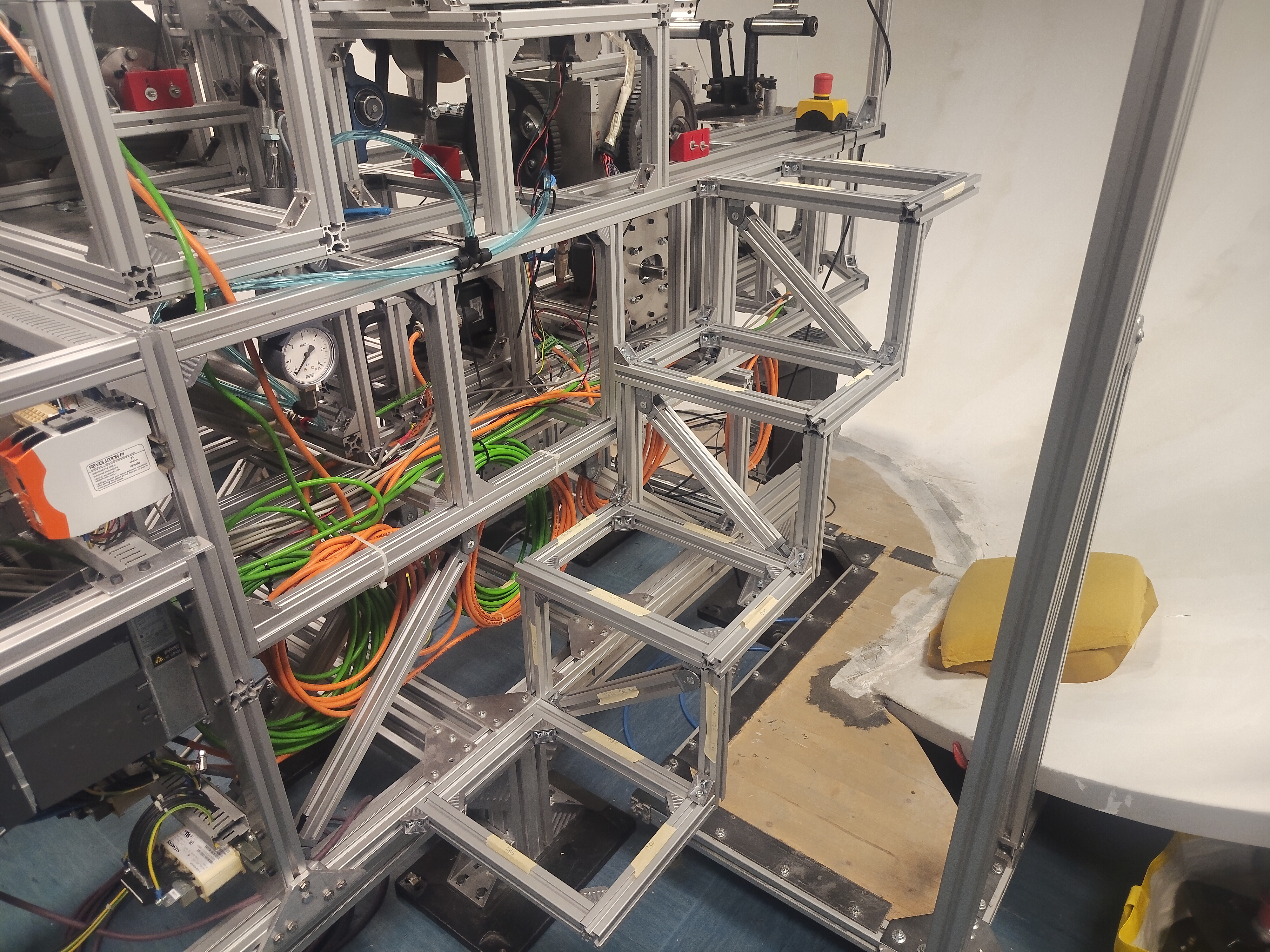
Alt...
The parts assembled into stairs in a laboratory
But seriously though, I think that your point is well supported by research under the term "desirable difficulty".
However I can highly recommend the FreeOTP+ fork which has some other nice features, but crucially, saves and loads data correctly.
inotifywait --monitor --recursive ~/.configThis shows me what files are changed when I click "Apply". This way I don't need to wade through pages of config file documentation, but I still know what I need to reproduce.
This time it's #Debian with #Docker. I used to avoid containers, preferring to run services directly instead. But setting up backups made me appreciate the separation between the application data in image and persistent state in mounted volumes. The final piece that convinced me is the ability to self-host my own container registry with @forgejo@floss.social
I'm doing the initial setup through #Ansible (learned from @notthebee@tilde.zone), but specific applications are managed via dockge. The ambition to do every adjustment through playbooks burns out really fast when working with a single instance.
Although familiarity with usual vim still comes in handy on the school computer 😅
I'm expecting to also do Debian and Docker, but with Ansible and Borg backup. I'm curious to be convinced otherwise
This is what #FOSS promises to be, and it does feel nice to actually do it.
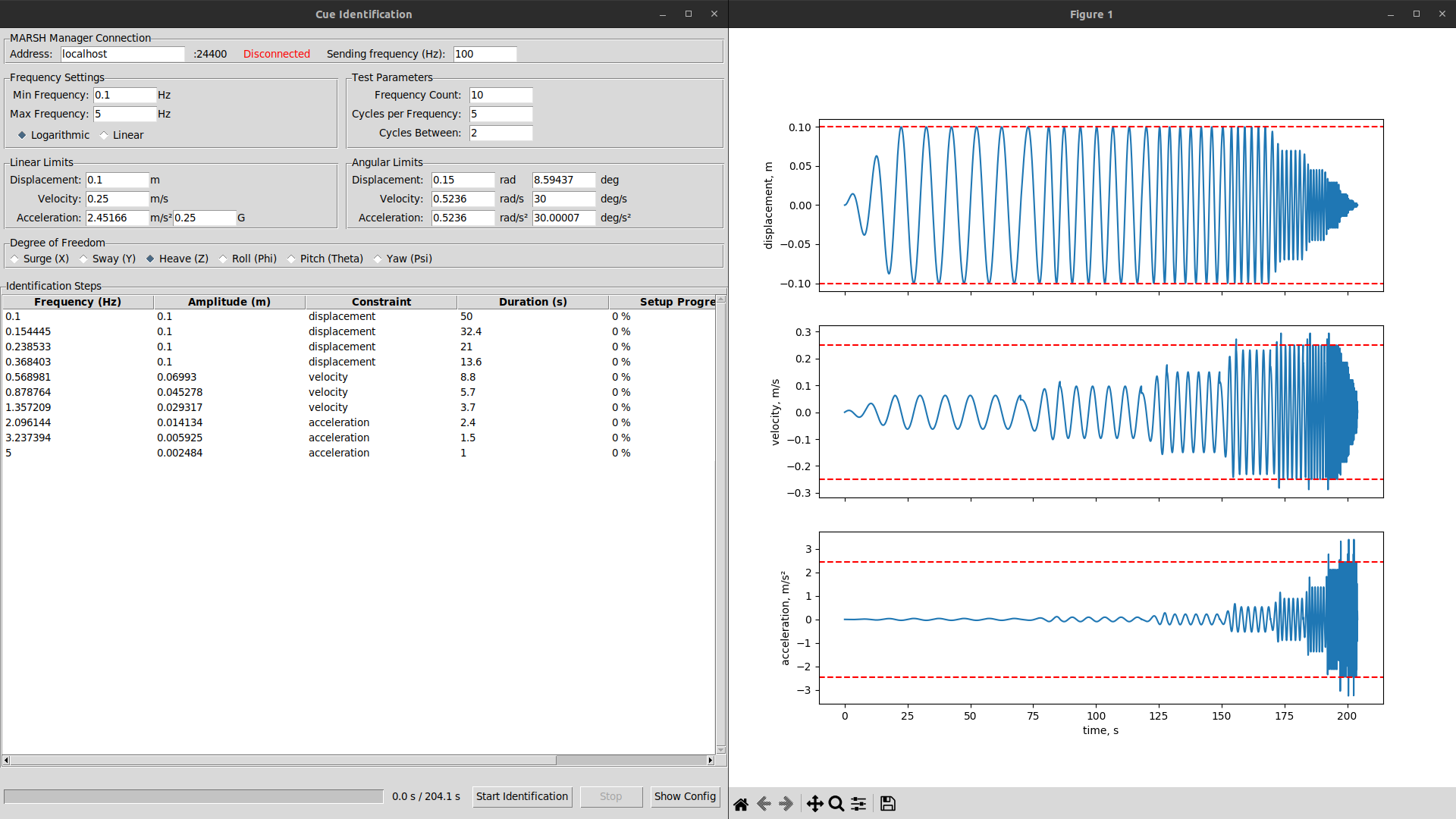
I did enjoy the ease of setup of TkInter, and compatibility with Matplotlib, but I was missing the simplicity of immediate mode libraries. In trying to emulate these, now a few callbacks trigger "given this dataclass with state, the widgets should look like this".
The micro-management gremlin is whining that it's repeating useless work, but more importantly the window is complete and I can go on with the experiment.
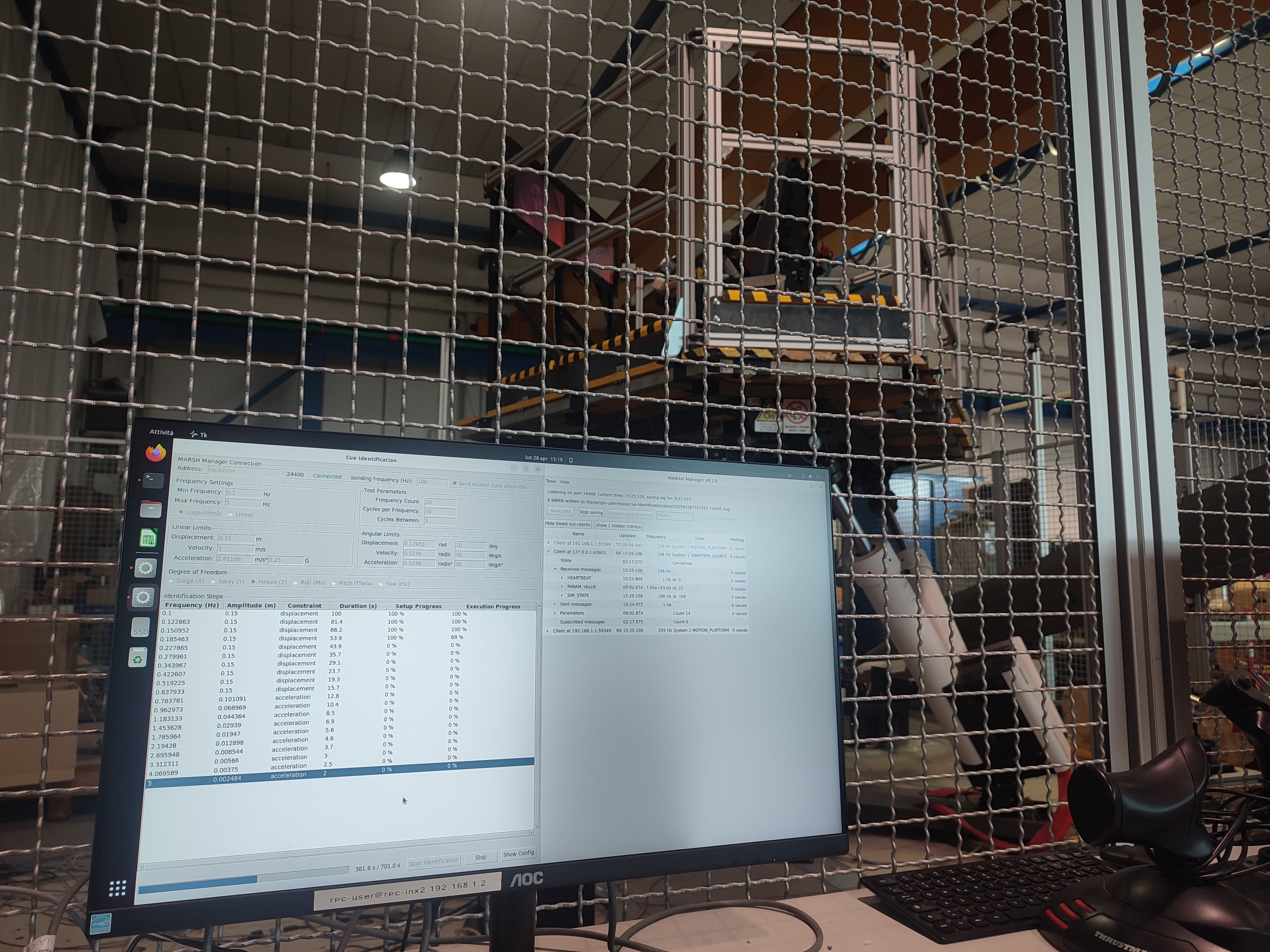
Alt...
Screenshot of a basic graphical application with settings, showing plots of generated signal to its side.